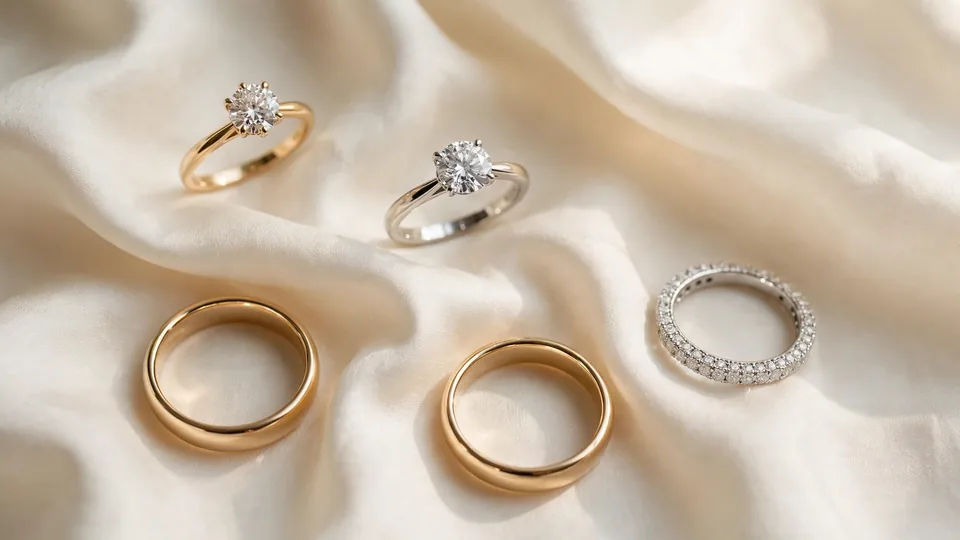
Timeless wedding rings are classic styles that stay elegant across decades — the round solitaire, the plain gold band, the diamond eternity ring and the three-stone ring. Chosen in durable metals like platinum or 18k gold with clean, balanced proportions, they pair with any engagement ring and never look dated.
Trends come and go — chunky sculptural bands one year, barely-there threads the next — but certain ring designs have survived a century of changing fashion without losing their appeal. These are the rings your grandmother wore, the rings on vintage red carpets, and the rings jewellers still recommend first when a couple asks for something they will love at their golden anniversary as much as on their wedding day.
In this guide we have gathered 19 timeless wedding rings, each a genuinely different style, metal or concept. From the quietly perfect plain band to the heirloom you hope to pass down, you will find inspiration for her, for him, for stacking, for engraving and for every budget — plus how to care for a classic so it truly lasts forever.
1. The Classic Round Solitaire
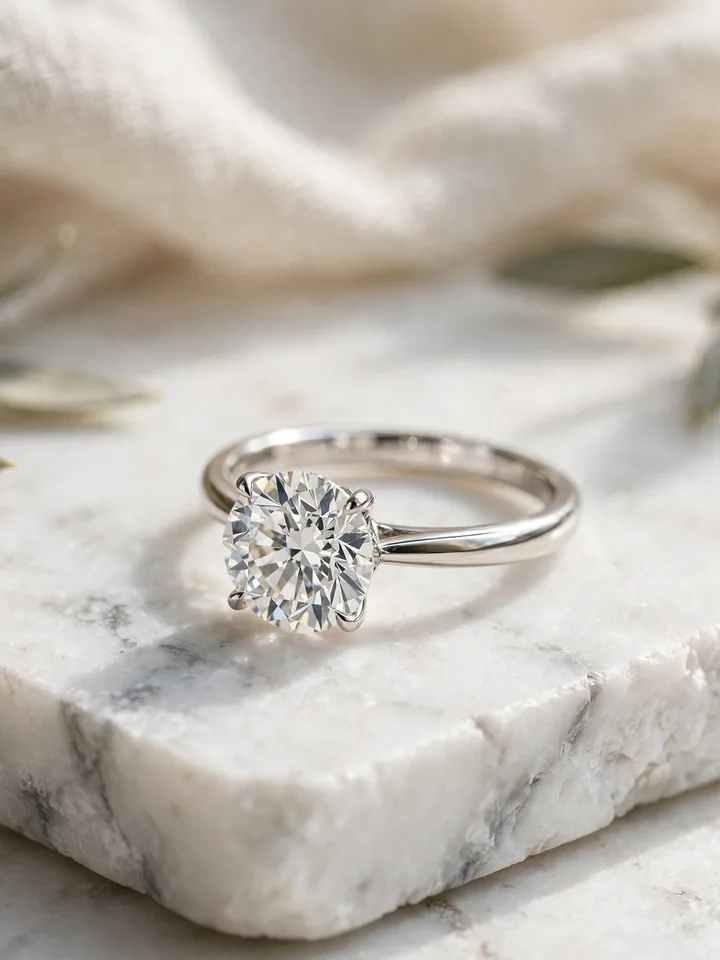
No ring says “forever” quite like the round brilliant solitaire. With 58 precisely cut facets engineered to return maximum light, the round diamond has been the world’s most popular engagement and wedding ring stone for over a century — and there is no sign of that changing. Its perfect symmetry flatters every finger shape and sits beautifully beside almost any wedding band.
What makes the solitaire truly timeless is its restraint. A single stone on a slender, unadorned band lets the diamond do all the talking, which means the design never competes with changing fashion. Whether the centre stone is a natural diamond, a lab-grown diamond or a brilliant moissanite, the silhouette reads instantly as a wedding ring in any decade.
Choose a setting height that suits your lifestyle — lower-profile baskets snag less and sit flush under gloves, while a classic six-prong Tiffany-style setting lifts the stone for maximum sparkle. Pair it with a straight or gently curved wedding band, and you have a bridal set that will photograph beautifully at every anniversary.
2. The Plain Gold Wedding Band
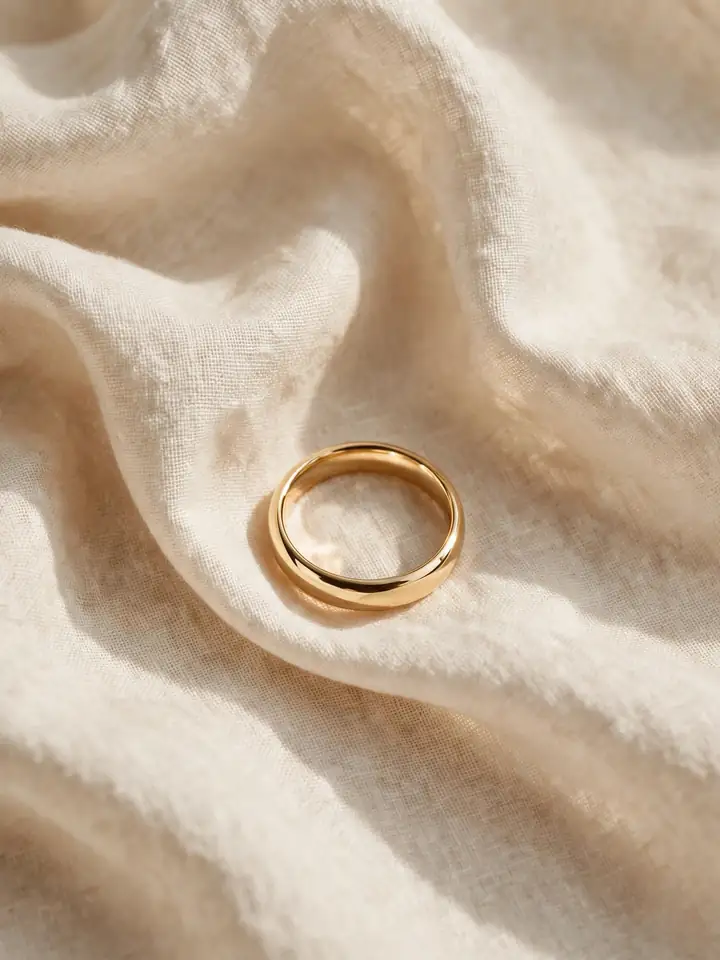
The plain wedding band is the oldest wedding ring design in existence, and its simplicity is exactly why it endures. A smooth, unadorned circle of gold — no stones, no engraving on the outside, no trend-driven detail — has symbolised marriage since ancient Egypt. It goes with everything, suits every age, and never needs updating.
Within this simplicity there is room for personal choice. Classic court (comfort-fit) bands curve gently on the inside for all-day comfort, while flat bands offer a more contemporary crispness. Width matters too: delicate 2mm bands feel refined and stack beautifully, while a confident 5–6mm band makes a quiet statement, especially for men.
Yellow gold remains the traditional choice and flatters warm skin tones gorgeously, developing a soft patina over the years that many wearers love. A plain band is also the most practical timeless wedding ring — affordable, easy to resize, simple to polish back to new, and comfortable enough to wear every single day for decades.
3. The Platinum Eternity Band
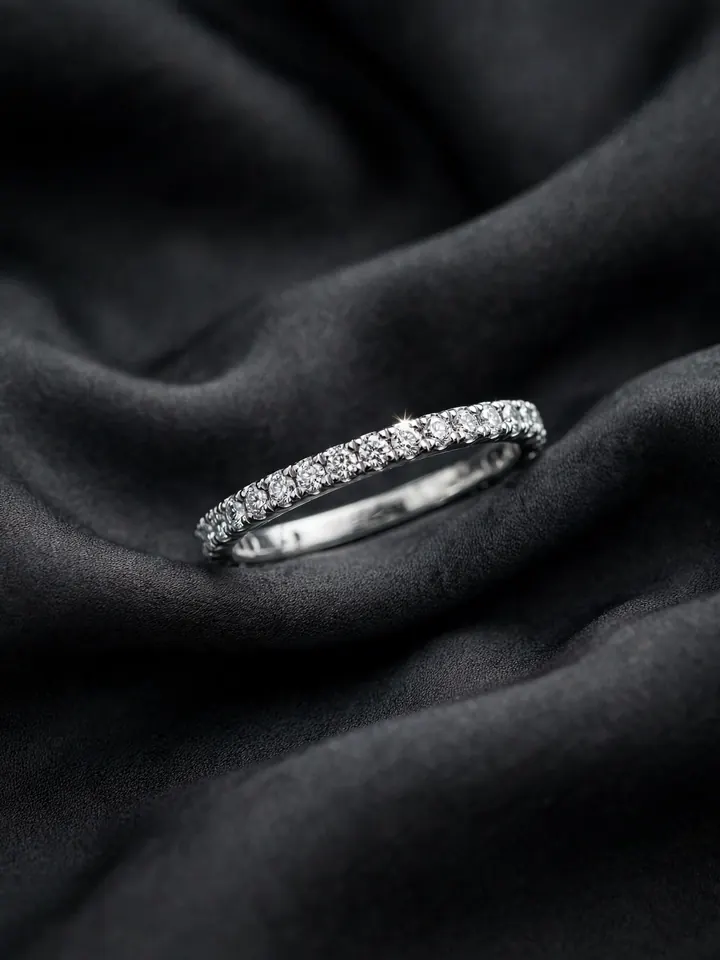
An eternity band — diamonds or gemstones encircling the entire ring — symbolises never-ending love, and few designs feel as luxurious yet as classic. The full eternity style dates back centuries, but it became a modern icon of enduring romance, often given to mark a first anniversary or the birth of a child.
Platinum is the ultimate metal for an eternity band. Its density holds small stones more securely than gold, its naturally white lustre never yellows, and it develops a soft satin patina that collectors of fine jewellery prize. Because the stones wrap all the way around, the ring sparkles from every angle — no “top” or “bottom” to worry about.
One practical note: full eternity bands cannot be resized, so precise sizing is essential. If your finger size may change, consider a half-eternity band with stones across the top half only — visually identical when worn, and resizable. Either way, this is a timeless wedding ring that reads as pure, uninterrupted brilliance.
4. The Three-Stone Ring
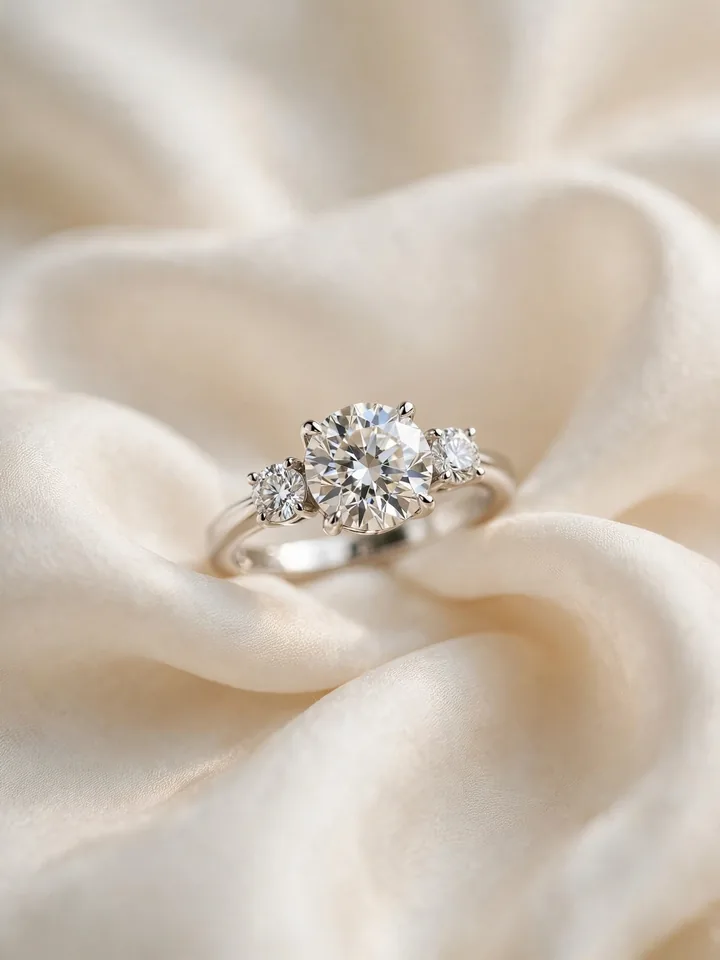
The three-stone ring carries one of jewellery’s most romantic meanings: past, present and future. That symbolism, combined with its beautifully balanced proportions, has kept it in the canon of timeless wedding rings since the Victorian era. A larger centre stone flanked by two smaller matching stones creates a graceful taper that elongates the finger.
Traditionally all three stones are diamonds, but sapphires, emeralds or rubies as side stones add a personal, heirloom-like character without breaking the classic mould. The side stones are usually about a third to half the size of the centre stone — enough to frame it, never to compete with it.
Three-stone rings pair wonderfully with both plain and diamond wedding bands, and the setting sits slightly raised, giving the design presence on the hand. If you want a ring with built-in meaning that guests will ask about for years, this storied style delivers sentiment and sparkle in equal measure.
5. The Pavé Diamond Band
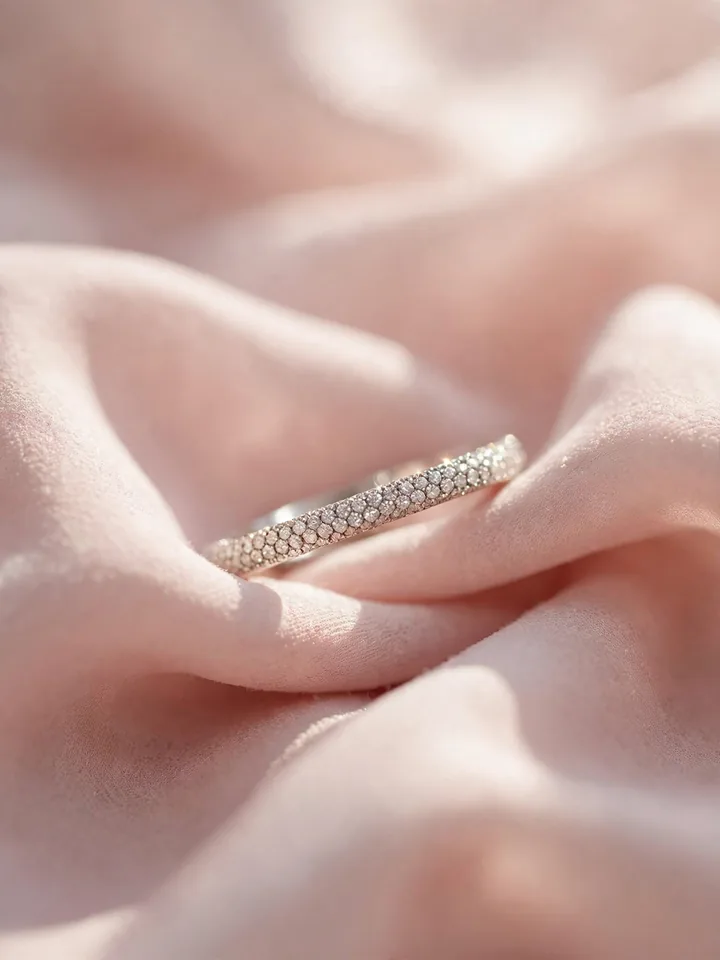
Pavé — from the French for “paved” — sets tiny diamonds close together so the band appears paved with light. It is the perfect middle ground for brides who love sparkle but want something more refined than a chunky statement ring. From a distance it reads as one continuous ribbon of brilliance.
The beauty of pavé is its versatility. A delicate 1.5mm pavé band stacks effortlessly with a solitaire engagement ring, adding shimmer without stealing focus. A wider 3mm pavé band, meanwhile, is substantial enough to wear alone as a wedding ring — a full look of diamonds with the comfort of a band.
Because pavé uses many small stones rather than one large one, it delivers impressive sparkle at a more accessible price point than a solitaire of similar visual impact. Choose a reputable jeweller for pavé work, as the tiny beads holding each stone demand skilled craftsmanship — well-made pavé lasts generations.
6. The Vintage-Inspired Milgrain Ring
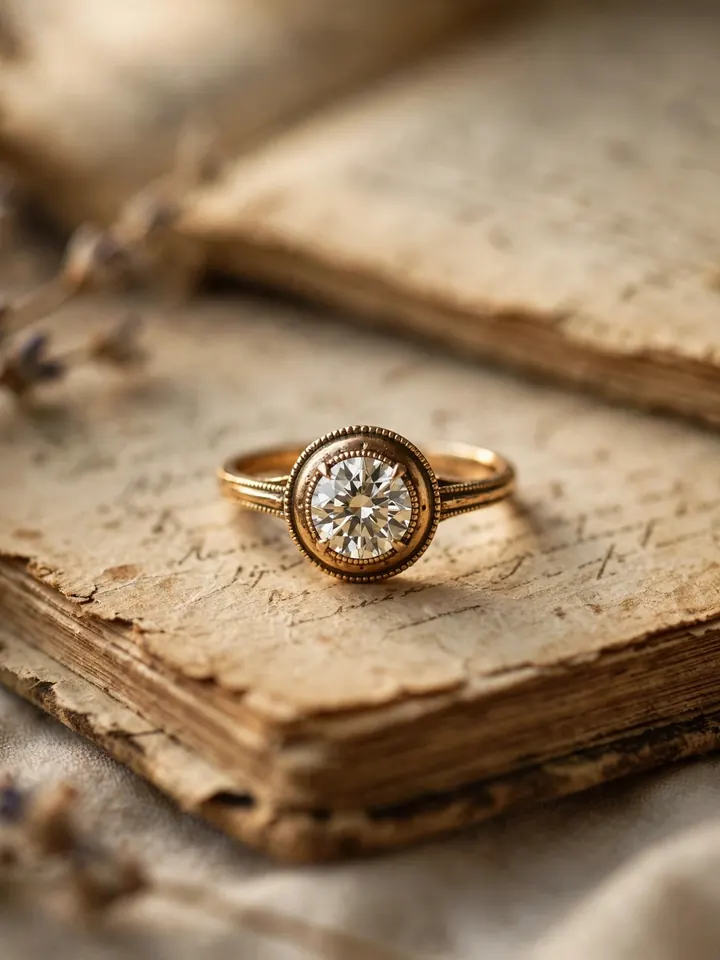
Milgrain — a border of tiny metal beads edging a ring’s outline — is a signature detail of Edwardian and Art Deco jewellery. Vintage-inspired rings borrow this hundred-year-old technique to give new rings an instant heirloom soul, and the effect is pure timeless romance rather than costume.
What makes milgrain designs endure is how they catch light. The beaded edge creates a soft, shimmering frame around the centre stone or band, adding texture and definition without a single extra diamond. It is a detail you feel as much as see — a whisper of craftsmanship from a more romantic era.
Milgrain pairs beautifully with old-cut diamonds like old European or cushion cuts, whose softer sparkle echoes antique stones. If you adore vintage style but want a new ring with a warranty and modern durability, a milgrain-accented design gives you the best of both centuries.
7. The Yellow Gold Classic
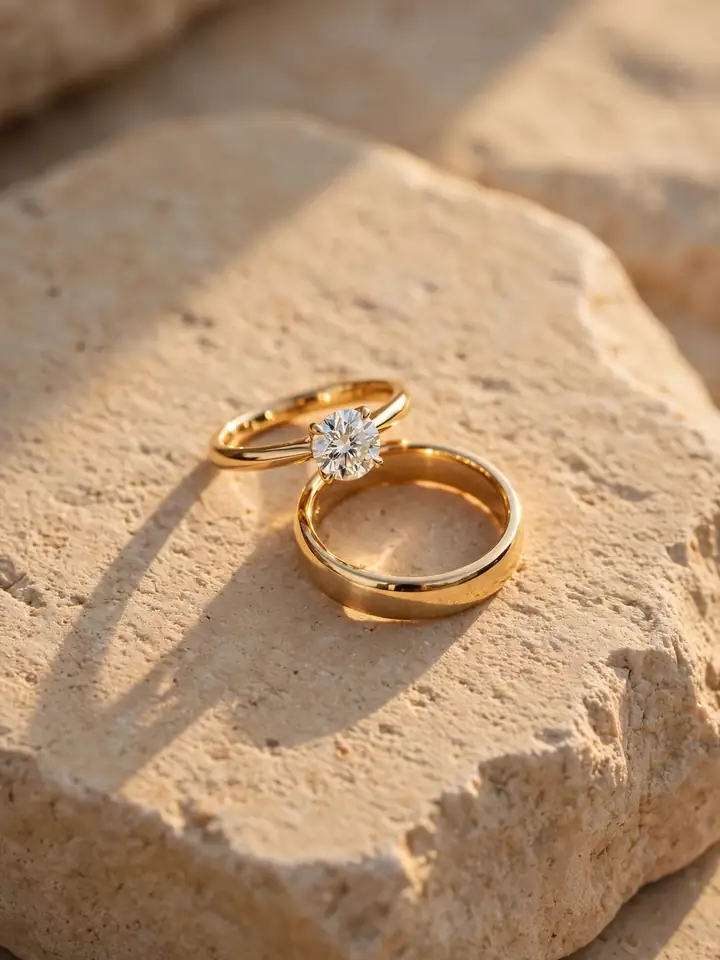
Yellow gold is the original wedding ring metal, worn by brides for millennia before white metals became fashionable. Its warm glow flatters most skin tones, photographs richly, and carries an unmistakable sense of tradition — the ring colour most people picture when they hear “wedding ring.”
Modern yellow gold classics go far beyond the plain band. Consider a yellow gold solitaire with a warm-toned diamond, a tapered baguette eternity band, or a knife-edge band whose crisp ridge catches light beautifully. The metal’s warmth makes even small diamonds appear larger and more luminous.
Yellow gold is also wonderfully practical: it is easy for jewellers to work with, simple to resize and repair, and 18k yellow gold offers an ideal balance of rich colour and everyday durability. If you want a timeless wedding ring with heritage in every gleam, start with yellow gold.
8. The Rose Gold Romantic
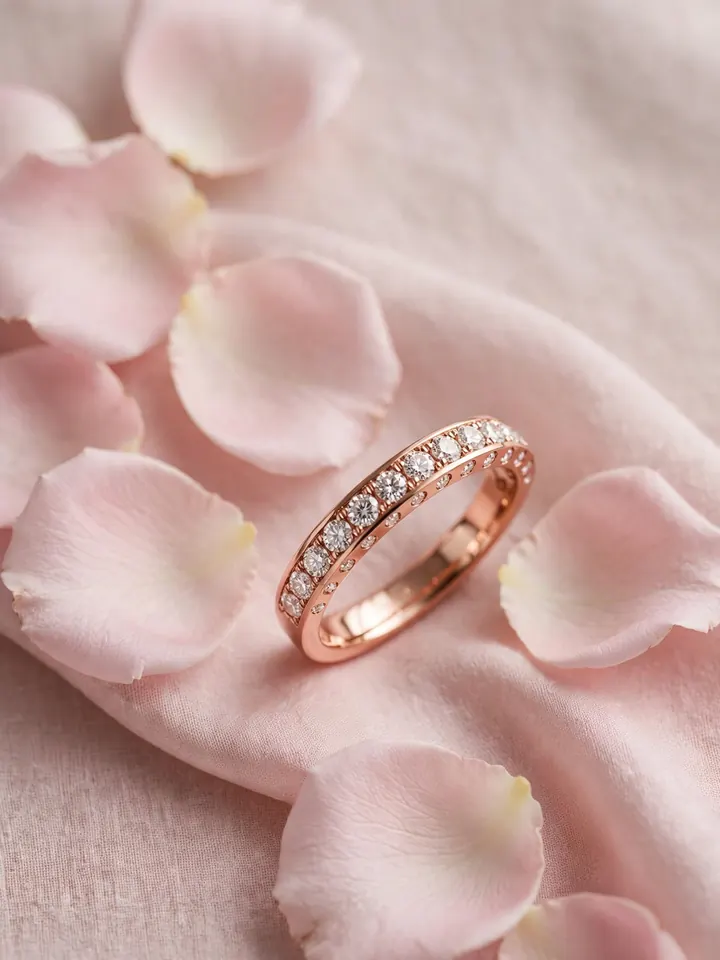
Rose gold’s blush tone — created by alloying gold with copper — gives wedding rings a romantic warmth that feels both vintage and fresh. Though it surged in popularity in the 2010s, rose gold is no passing trend: it was beloved in 19th-century Russia and has cycled through fashion for over a century.
The pink hue is uniquely flattering, softening the look of diamonds and complementing both fair and deep skin tones. A rose gold solitaire feels tender and feminine, while a rose gold eternity or pavé band adds warmth to a bridal stack without overwhelming it.
Durability is a quiet advantage: the copper alloy makes rose gold slightly harder and more scratch-resistant than yellow gold. It also pairs surprisingly well with yellow and white gold rings in a mixed-metal stack — a modern-classic look that keeps a timeless wedding ring feeling personal rather than prescribed.
9. The Sleek White Metal Band
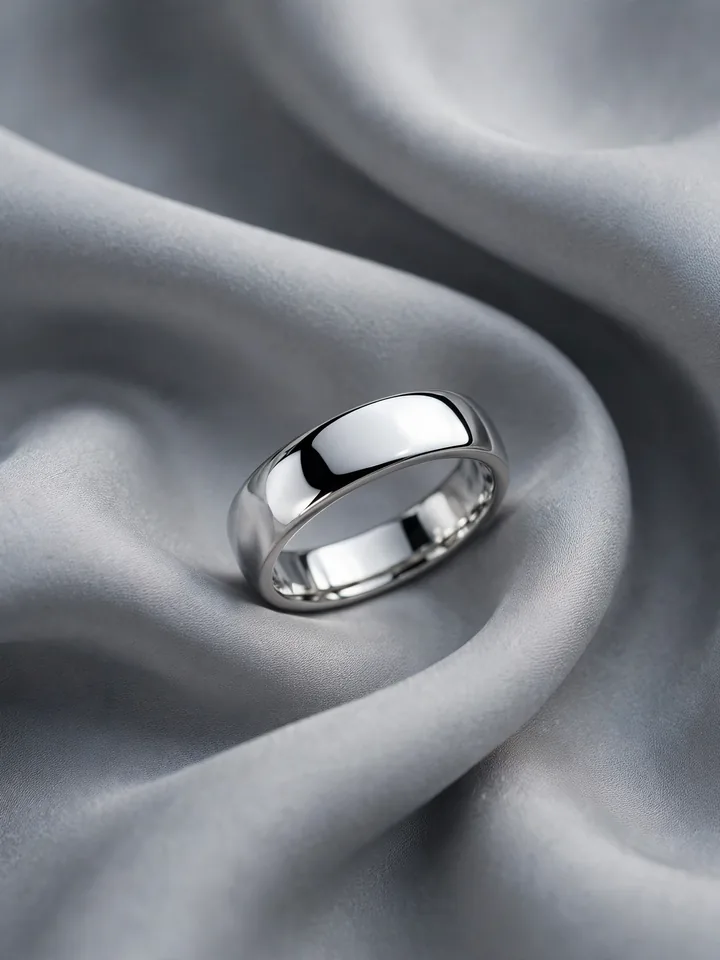
For lovers of cool, clean minimalism, nothing beats a sleek band in platinum or white gold. The bright white metal makes diamonds appear whiter and larger, and its mirror polish gives even the simplest band a crisp, architectural elegance that suits modern and traditional tastes alike.
Platinum is the premium choice — naturally white, hypoallergenic, and so dense it wears down more slowly than gold. White gold offers a similar look at a lower price, though it needs re-rhodium-plating every year or two to keep its bright finish. Both are excellent canvases for timeless wedding rings.
A polished white metal band is the ultimate versatile wedding ring: it matches any engagement ring, suits professional settings, and transitions effortlessly from day to evening. If your style is understated and you want your diamonds to do the talking, this is your forever ring.
10. His Timeless Band
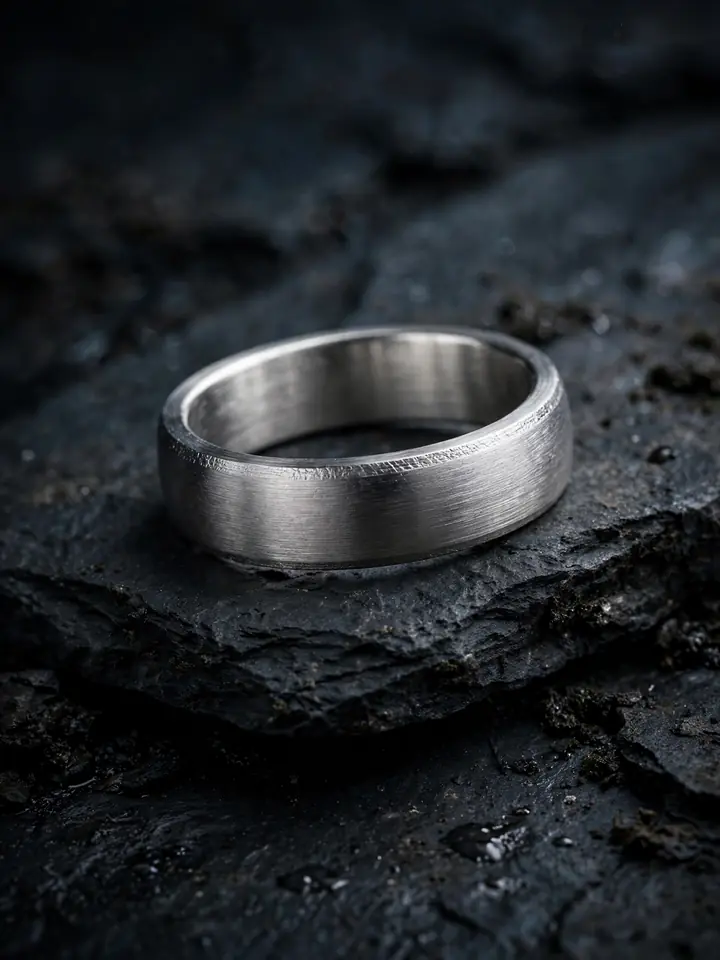
Men’s wedding rings deserve the same timeless consideration, and the classics for him are beautifully simple: a comfort-fit band in platinum, yellow gold or white gold, with a brushed, satin or polished finish. No ornamentation is needed — proportion and finish carry the design.
Width and profile define a man’s ring. A 6mm court band is the enduring standard — substantial without being bulky — while wider 7–8mm bands suit larger hands. Brushed and satin finishes hide everyday scratches far better than high polish, making them the practical timeless choice for active lives.
Subtle personalisation keeps it classic: an engraved wedding date or initials inside the band, invisible to everyone but the wearer. Platinum is the heirloom-grade pick for him, but tungsten and titanium offer modern durability at lower prices — just note they cannot be resized like precious metals.
11. The Perfect Wedding Ring Stack
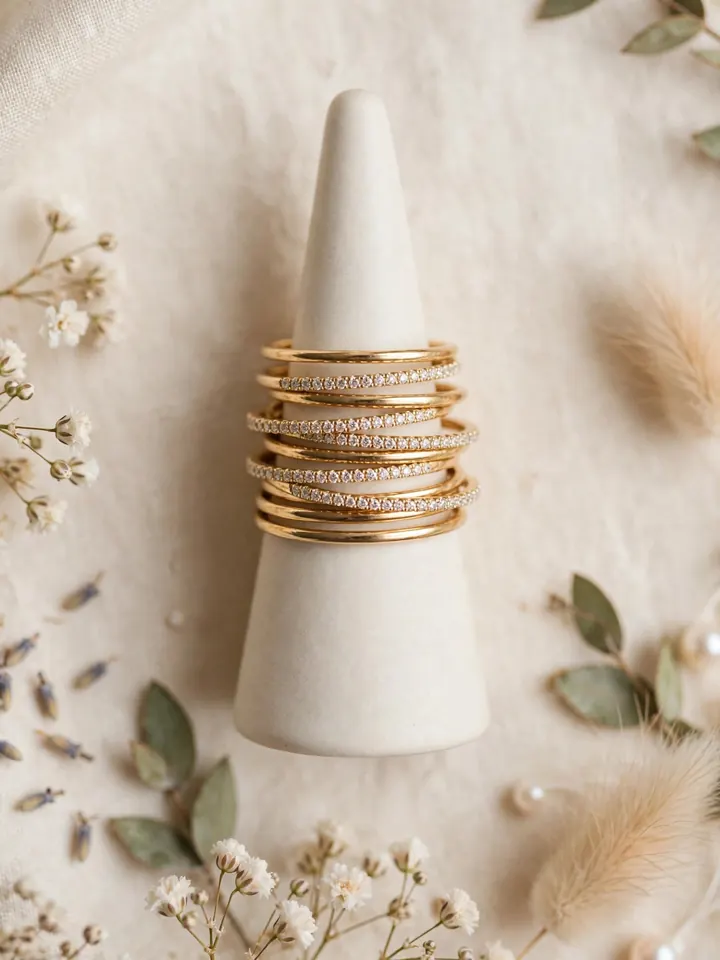
Stacking — layering two, three or more slim bands — turns timeless wedding rings into a personal composition. Start with your wedding band as the anchor, then add an eternity ring, a plain spacer band or a delicate pavé thread. The result is a curated look that grows with your milestones.
The key to a stack that stays timeless rather than trendy is restraint in variation. Keep metals in the same family or deliberately mixed in a balanced way, graduate widths so the eye travels smoothly, and leave breathing room with at least one plain band between diamond bands. Odd numbers of rings tend to look most harmonious.
Stacks are also wonderfully practical: add a ring for each anniversary or child, and your hand tells your story. Because each individual band is a classic on its own, the stack never dates — you can rearrange, remove or add bands for decades without the set feeling “last season.”
12. The Sapphire Accent Classic
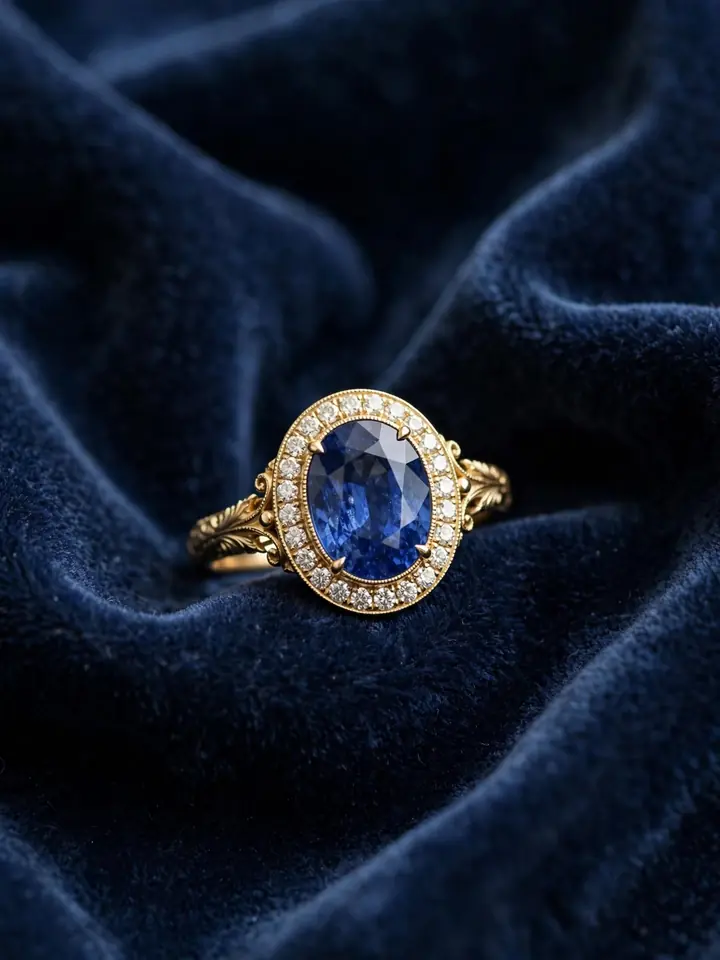
Blue sapphire wedding rings earned permanent classic status the moment royal brides chose them — the style has been coveted since Princess Diana’s iconic ring in 1981. A cornflower-blue sapphire surrounded by diamonds is regal, romantic and unmistakably a wedding ring, yet distinct from an all-diamond design.
Sapphires are also a pragmatic timeless choice: at 9 on the Mohs hardness scale, second only to diamond, they withstand daily wear beautifully. Their deep colour hides small inclusions and everyday wear better than a white stone, so the ring looks pristine for longer between cleanings.
Keep the design traditional — oval or cushion sapphire, diamond halo, yellow or white gold — and the ring reads as heritage rather than fashion. For brides who want colour with staying power, the sapphire accent is the timeless wedding ring that photographs like jewellery history.
13. The Bezel-Set Minimalist
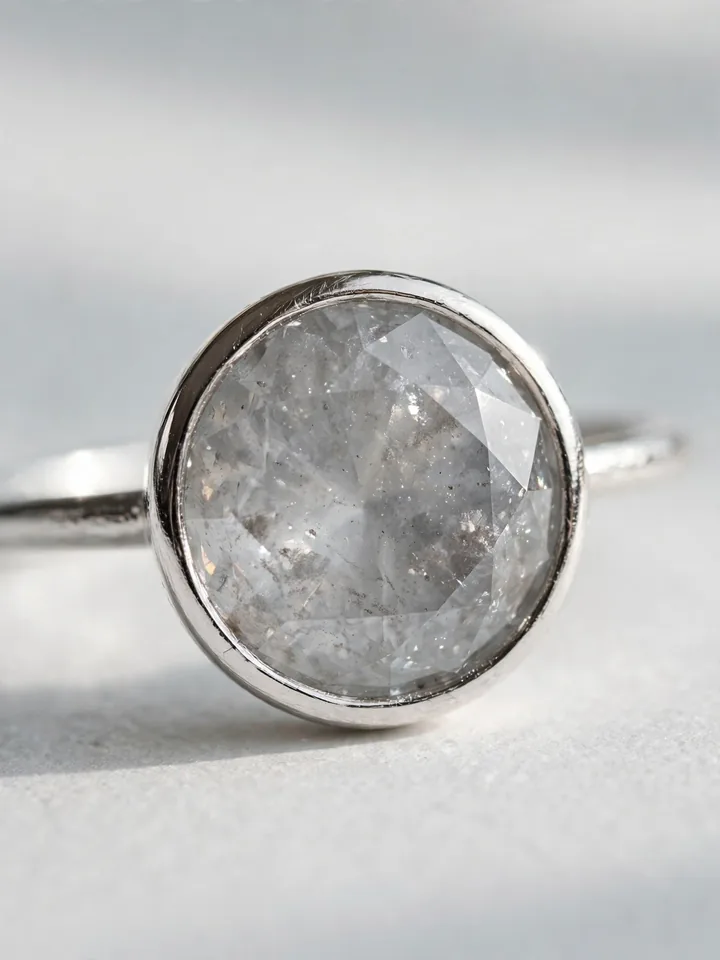
In a bezel setting, a thin rim of metal encircles the stone completely, holding it flush and secure. The look is sleek, modern and quietly confident — and though it feels contemporary, bezel setting is one of jewellery’s oldest techniques, used for centuries before prongs became popular.
Minimalists love the bezel for its clean lines: no prongs to catch on fabric, a smooth silhouette that slides easily into gloves, and a slightly larger face-up appearance as the metal rim frames the stone like a picture. It is the most practical setting for active lifestyles and hands-on work.
A bezel-set solitaire or bezel-set diamond band in platinum or gold is a timeless wedding ring for the woman who wants luxury without fuss. The setting also protects the stone’s girdle from chips — beauty and engineering in perfect balance.
14. The Engraved Wedding Band
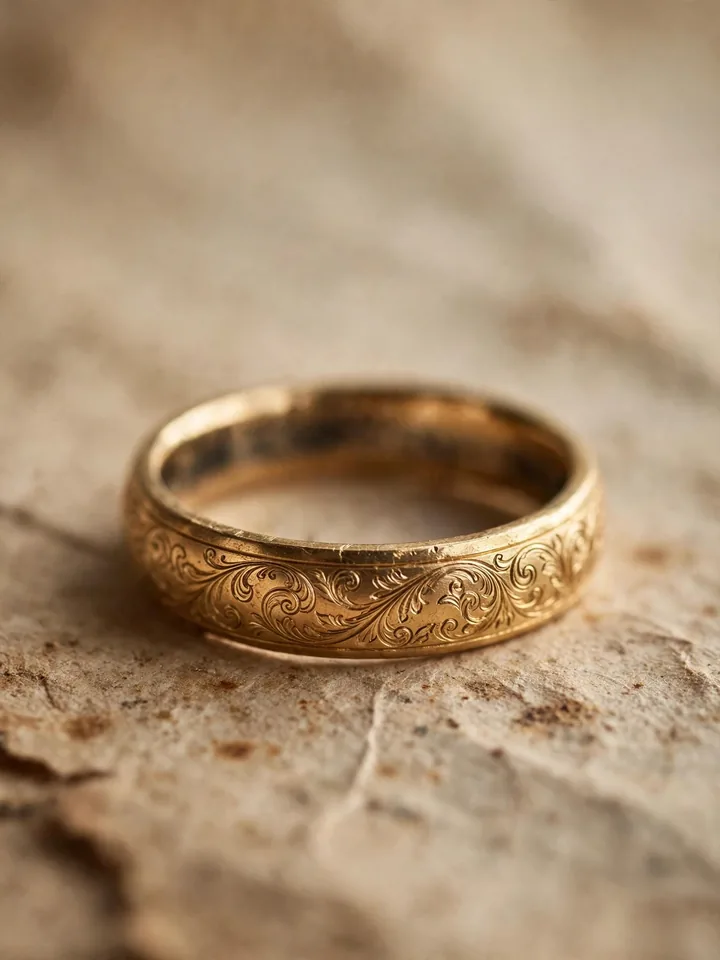
Engraving transforms any classic band into a one-of-a-kind heirloom. A wedding date, initials or a few meaningful words inscribed inside the band is the most timeless personalisation there is — invisible to the world, known only to the couple, and as enduring as the metal itself.
Hand engraving, with its slightly imperfect, flowing lines, carries a warmth that machine engraving cannot match, and it suits vintage-inspired rings beautifully. For the outside of the band, consider delicate patterns — wheat, laurel or scroll motifs — which have decorated wedding rings for centuries.
Keep inscriptions short: deep, well-spaced lettering wears better over decades than fine shallow script. Whether it is your wedding date in Roman numerals or a private phrase, an engraved timeless wedding ring carries your story in the most literal way possible.
15. The Channel-Set Band
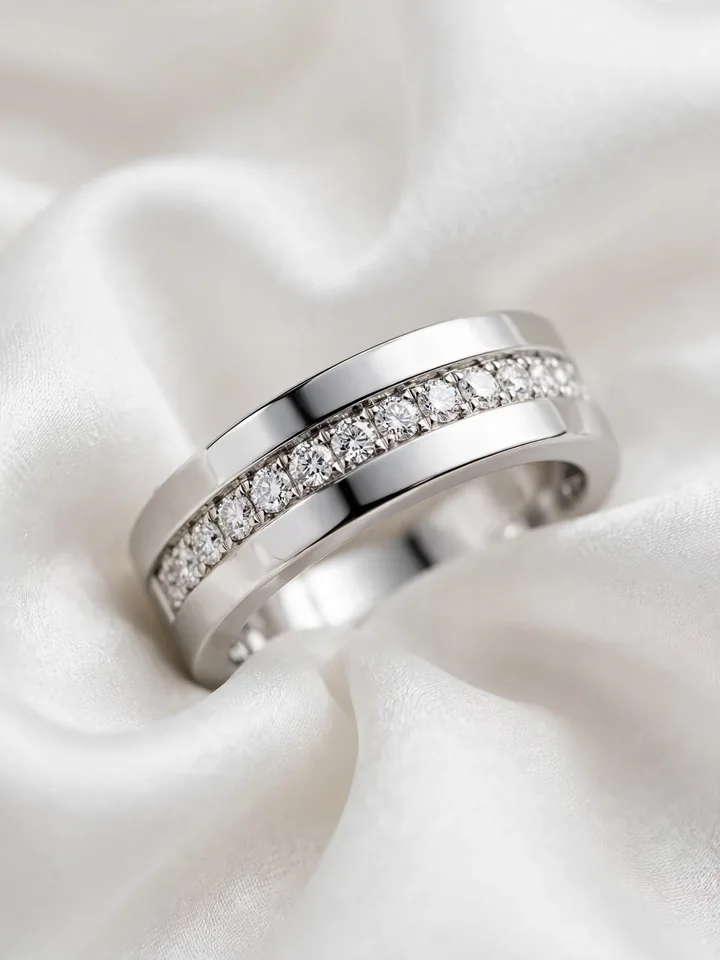
Channel setting seats diamonds in a neat row between two walls of metal, creating an unbroken ribbon of sparkle with no prongs at all. The result is streamlined, elegant and exceptionally wearable — a favourite for wedding bands that must survive decades of daily life.
Because the stones sit protected within the channel, this is one of the most secure ways to wear diamonds every day. The smooth profile will not snag, scratch or catch, and the design sits beautifully flush against an engagement ring — a practical reason it has remained a bridal staple for generations.
A channel-set band works in any metal and at any width, from a delicate 2mm thread of diamonds to a bold 5mm statement. For brides who want continuous sparkle with total peace of mind, the channel-set band is the timeless wedding ring that asks for nothing and gives everything.
16. The Cathedral Solitaire
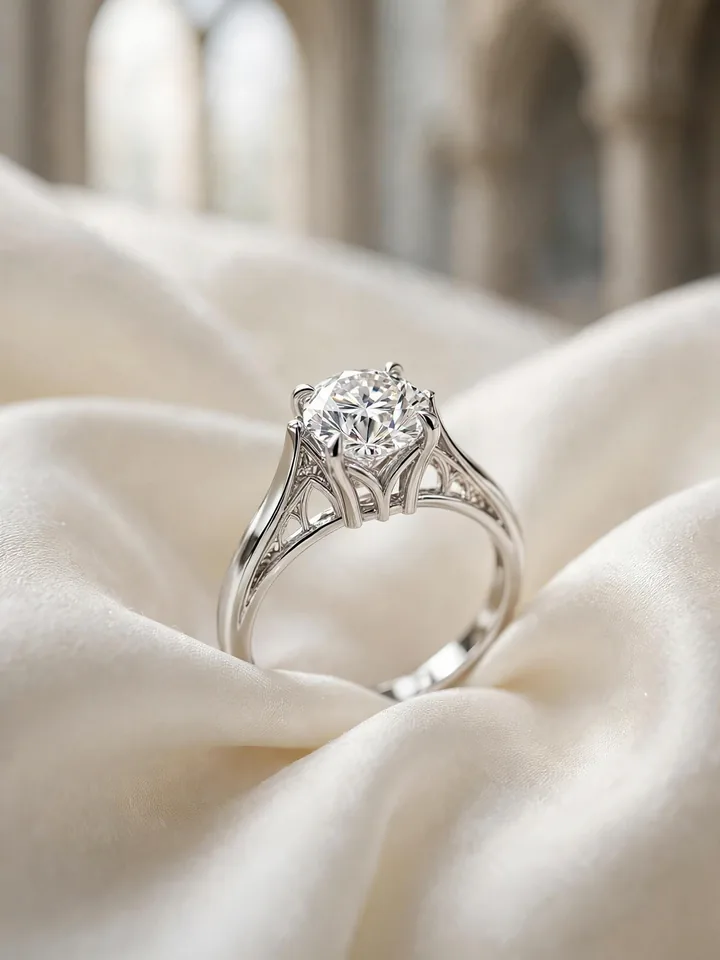
The cathedral setting raises the centre stone on graceful arches of metal that rise from the band like the arches of a cathedral — hence the name. This architectural elegance gives the solitaire extra presence and allows the diamond to catch light from every angle, including beneath the stone.
Beyond beauty, the cathedral design is structurally brilliant: the arched shoulders reinforce the setting, protecting the centre stone while creating a seamless visual flow into the wedding band. It is a favourite for bridal sets because the raised profile lets a straight wedding band sit perfectly flush beneath it.
Cathedral solitaires suit larger centre stones beautifully, as the elevated architecture balances the stone’s visual weight. In platinum or 18k gold, with optional pavé along the shoulders, this is a timeless wedding ring with genuine grandeur — classic, but never plain.
17. Timeless Rings on a Budget
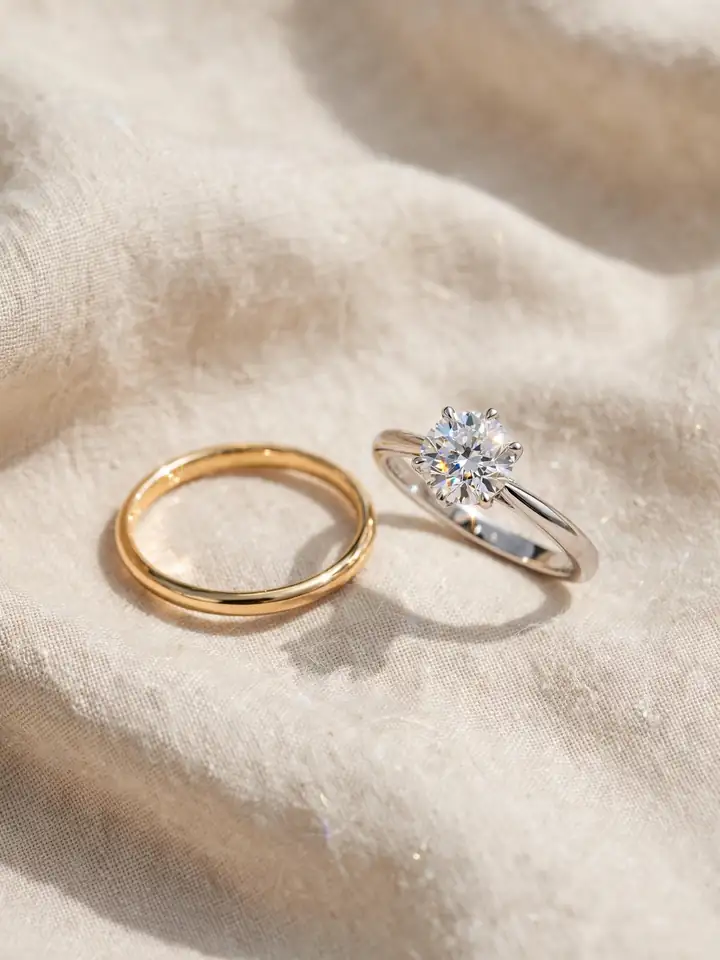
A timeless wedding ring does not require a lavish budget — it requires good proportions and honest materials. A simple 14k gold band, a well-cut moissanite solitaire or a delicate sterling silver design can look every bit as classic as rings costing ten times more, because timelessness is about design, not price.
Smart budget strategies include choosing 14k over 18k gold, opting for lab-grown diamonds or moissanite (visually identical to mined diamonds at a fraction of the cost), and favouring simpler settings where craftsmanship costs less. A plain band in solid gold will always outlast and outclass a trendy plated fashion ring.
Avoid the temptation of overly ornate cheap rings — intricate designs in low-quality materials age poorly. Instead, put your budget into one excellent classic: a perfectly finished plain band or a single beautiful stone in a simple setting. True timeless wedding rings earn their status by looking right in every decade, at every price.
18. Caring for Your Classics
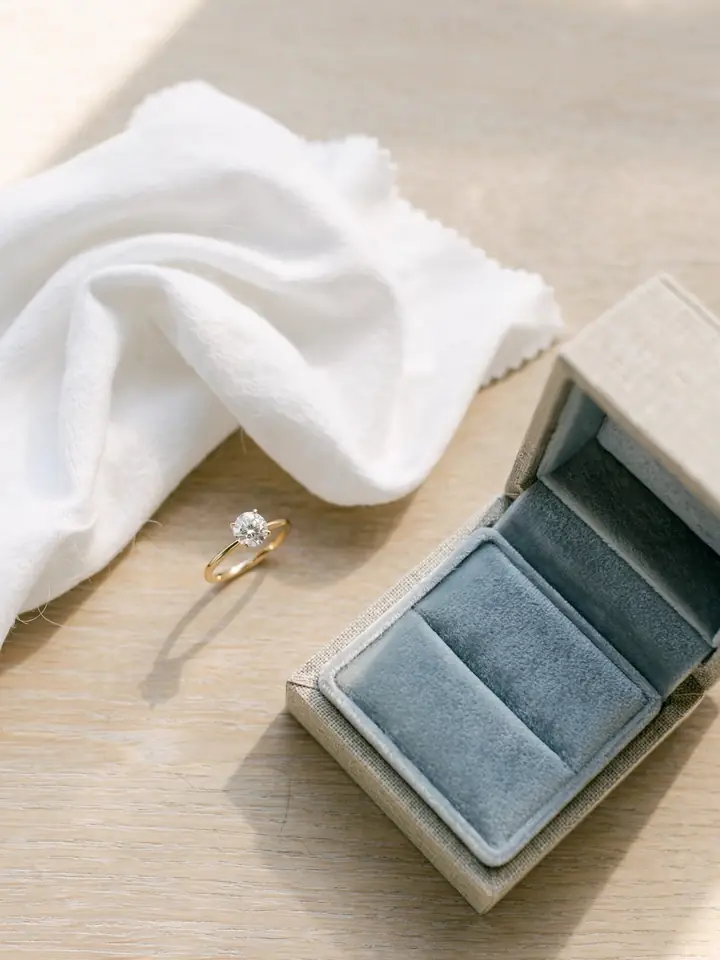
Even the most timeless wedding ring needs care to stay beautiful for decades. The good news: classics are the easiest rings to maintain. A weekly soak in warm water with a drop of mild dish soap, followed by a gentle brush with a soft toothbrush, keeps diamonds sparkling and gold gleaming.
Protect your ring from its enemies: remove it for heavy exercise, gardening, swimming (cold water shrinks fingers and chlorine weakens gold alloys) and household cleaning. Store it separately in a soft pouch so harder gemstones cannot scratch the metal, and have prongs checked by a jeweller once a year.
Professional cleaning and inspection every 12–18 months keeps a classic in heirloom condition — jewellers will tighten settings, repolish worn edges and restore rhodium on white gold. A timeless wedding ring is designed to be worn daily for a lifetime; a little routine care is all it asks in return.
19. The Heirloom Ring
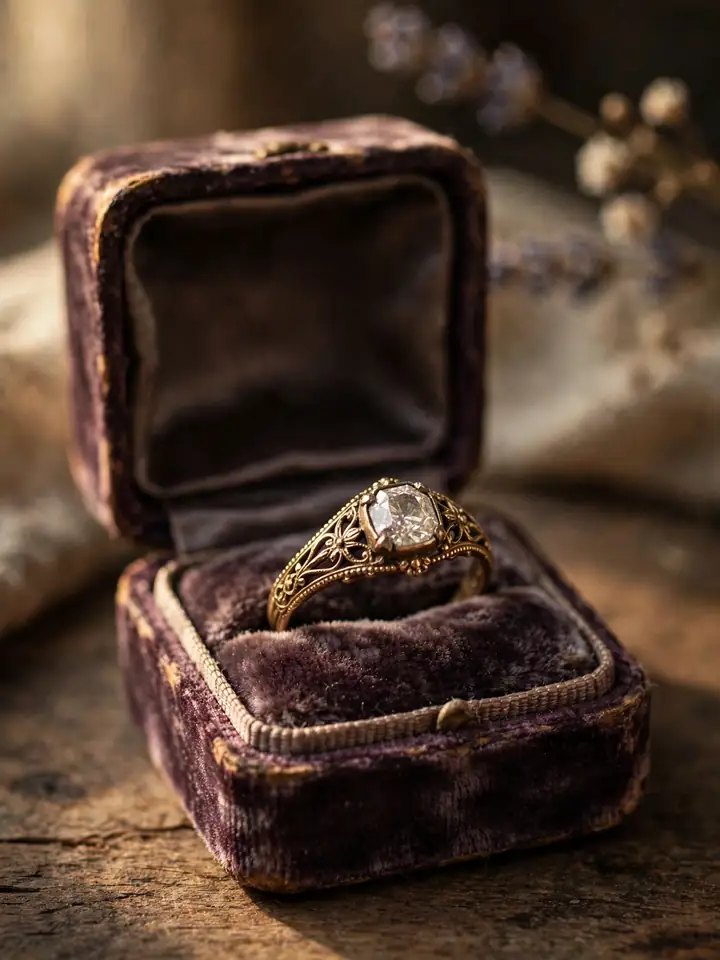
The ultimate timeless wedding ring is one that has already proven it: a grandmother’s diamond, a mother’s gold band, a ring that has witnessed decades of marriage. Heirloom rings carry a patina of love no new ring can replicate, and wearing one connects your wedding day to your family’s history.
Heirlooms can be worn as-is, resized, or respectfully restyled — resetting a grandmother’s diamond into a new band preserves the stone’s story while suiting your taste. Have any heirloom inspected first: vintage prongs may need rebuilding, and older cuts deserve settings that protect them.
If you do not have a family ring, you can start the tradition yourself. Choose one of the classics in this guide in the finest quality you can afford, wear it with love, and one day it will be the heirloom — the timeless wedding ring your grandchildren hope to inherit.
Frequently Asked Questions
What makes a wedding ring truly timeless?
A timeless wedding ring has clean proportions, a classic silhouette and a durable precious metal — designs like the solitaire, plain band, eternity ring and three-stone ring that have looked elegant for a century. Avoid extreme trends, oversized novelty shapes and plated fashion metals; choose balanced design in solid gold or platinum and your ring will never look dated.
Are plain gold wedding bands still in style?
Absolutely — the plain gold band has never gone out of style in thousands of years. It is the most versatile timeless wedding ring: it suits every age, pairs with any engagement ring, is comfortable for daily wear, easy to resize and polish, and carries unmatched symbolic simplicity. Minimalist and heritage brides continue to choose it first.
Which metal lasts longest for a wedding ring?
Platinum is the most durable precious metal for timeless wedding rings — dense, naturally white and hypoallergenic, it wears slowly and holds stones securely. Among golds, 18k offers rich colour with good strength, while 14k is harder and more scratch-resistant. For maximum longevity, platinum or 14k/18k solid gold will serve for generations.
How do I keep my wedding ring looking new?
Clean it weekly in warm soapy water with a soft brush, remove it for sports, swimming and cleaning, store it separately in a soft pouch, and have a jeweller inspect the prongs yearly. Classics in solid gold or platinum respond beautifully to professional polishing every year or two, which restores their original lustre.
Should my wedding ring match my engagement ring?
They do not have to match perfectly — many brides deliberately contrast metals or styles. What matters is that the two rings sit comfortably together and feel harmonious. A straight wedding band pairs with most solitaires, while curved or notched bands are designed to hug uniquely shaped engagement rings. Choose what feels like you.
A Ring for Every Forever
From the quiet perfection of a plain gold band to the heirloom you dream of passing down, timeless wedding rings prove that true style does not chase trends — it outlasts them. Choose the design that speaks to your story, in a metal made to last, and wear it knowing it will look as right at your fiftieth anniversary as it does today. Here’s to forever, beautifully ringed.