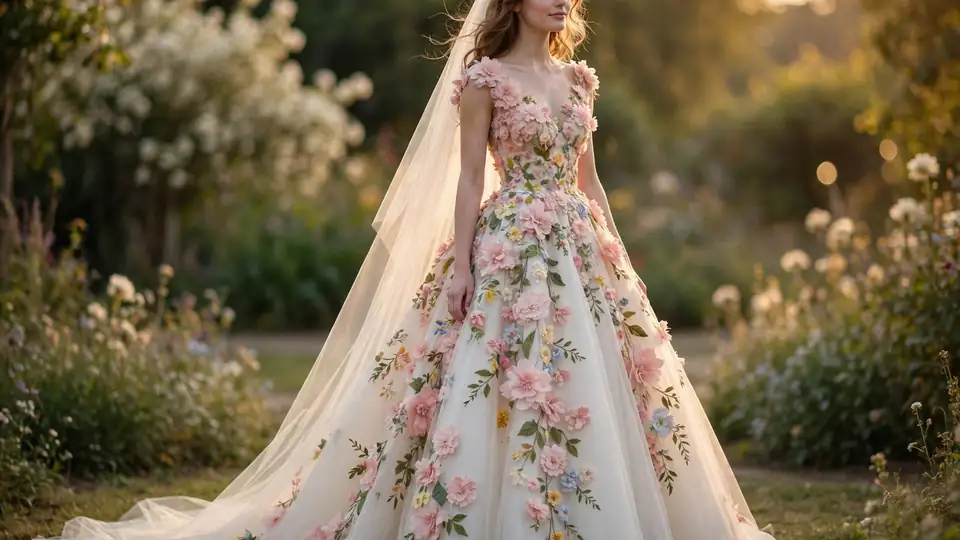
A floral wedding dress colored in pinks, blues, greens, or golds is a bridal gown that swaps plain white for floral motifs — printed, embroidered, or appliquéd — on ivory, tinted, or ombré bases. These non-traditional wedding dresses suit garden, bohemian, and statement weddings, and the best designs keep a couture silhouette so the color feels elegant rather than costumey.
Colored floral bridal gowns have moved firmly from niche to mainstream. Designers now treat florals the way they once treated lace: as a luxury textile in its own right, rendered in hand-painted prints, three-dimensional appliqué, and threadwork that can take hundreds of hours. The result photographs like a dream and still reads unmistakably as bridal.
This guide walks through 18 distinct ways to wear the trend — from soft watercolor florals and vintage damask to moody botanicals and tropical exotics. Each idea works as a complete bridal look, with notes on where it shines and how to keep the flowers looking bridal instead of busy.
1. Watercolor Floral Print Gowns
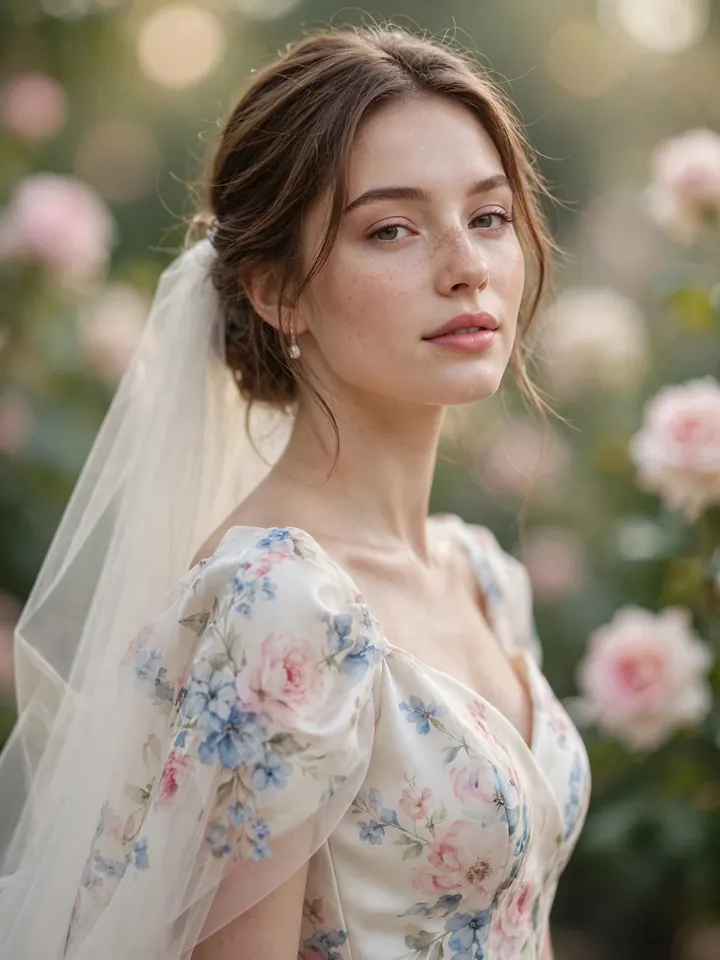
Watercolor florals are the gentlest entry into a floral wedding dress colored with real pigment. The print looks hand-painted — soft edges, translucent washes of pink, blue, and lilac — giving the gown a dreamy quality that flat digital prints rarely achieve. Because the flowers dissolve softly into the fabric, these dresses glow in natural light and feel artistic rather than loud.
This style suits garden weddings, spring ceremonies, and brides who love color but want it to whisper. A-line and sheath silhouettes work best, since too much volume can make a painterly print feel chaotic. Keep accessories minimal: pearl studs, a simple veil, and a bouquet in one accent color pull the look together.
When shopping, look for prints where the placement follows the body — blossoms drifting across the skirt rather than repeating in a grid. Ask your seamstress about hem placement, because cutting through a large painted bloom can look abrupt. Watercolor prints flatter most figures, as the soft pattern diffuses attention rather than drawing lines.
2. 3D Floral Appliqué Ballgowns
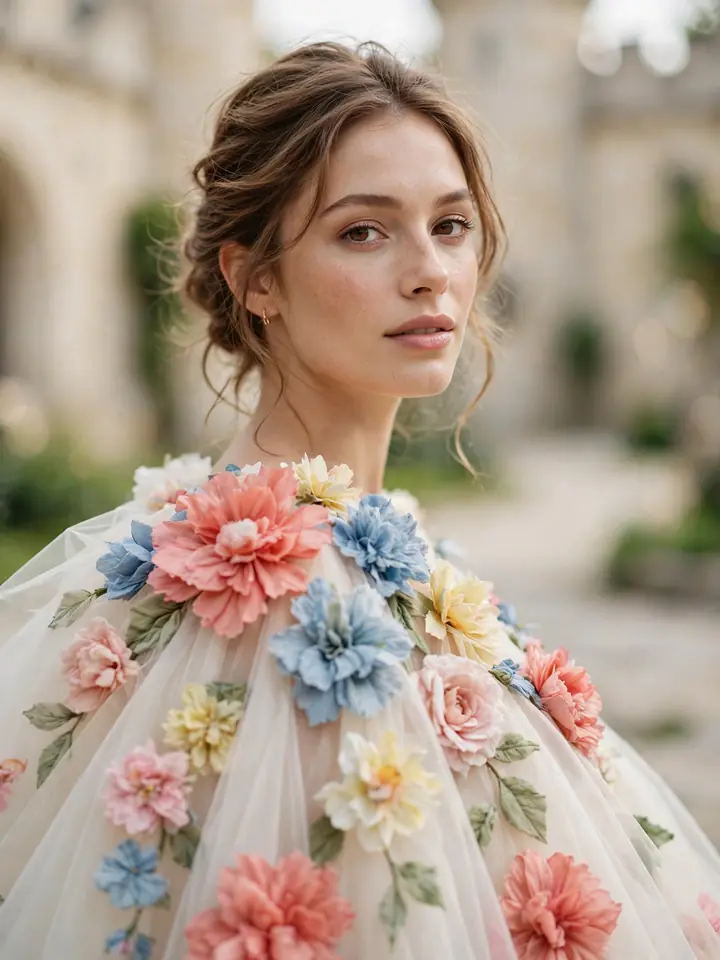
Nothing says statement like a ballgown scattered with three-dimensional fabric flowers. Unlike a printed dress, a 3D floral wedding dress colored in layered petals catches light and shadow as you move, giving the gown a living, sculptural quality. Organza and tulle petals are hand-sewn onto the skirt so the blooms lift and flutter with every step.
Ballgowns are the natural home for heavy appliqué because the full skirt has the real estate to carry it. This is the dress for grand venues — ballrooms, châteaux, formal churches. Petites should keep the appliqué concentrated at the hem and shoulders to avoid being overwhelmed by the volume.
Care matters: store the dress hung rather than folded, and ask the boutique how to transport it so petals are not crushed. On the day, a steamer — never an iron — is the only safe way to refresh the blooms. The payoff is a gown that looks different in every photo, from ethereal in soft light to theatrical in the evening.
3. Hand-Embroidered Floral Bodices
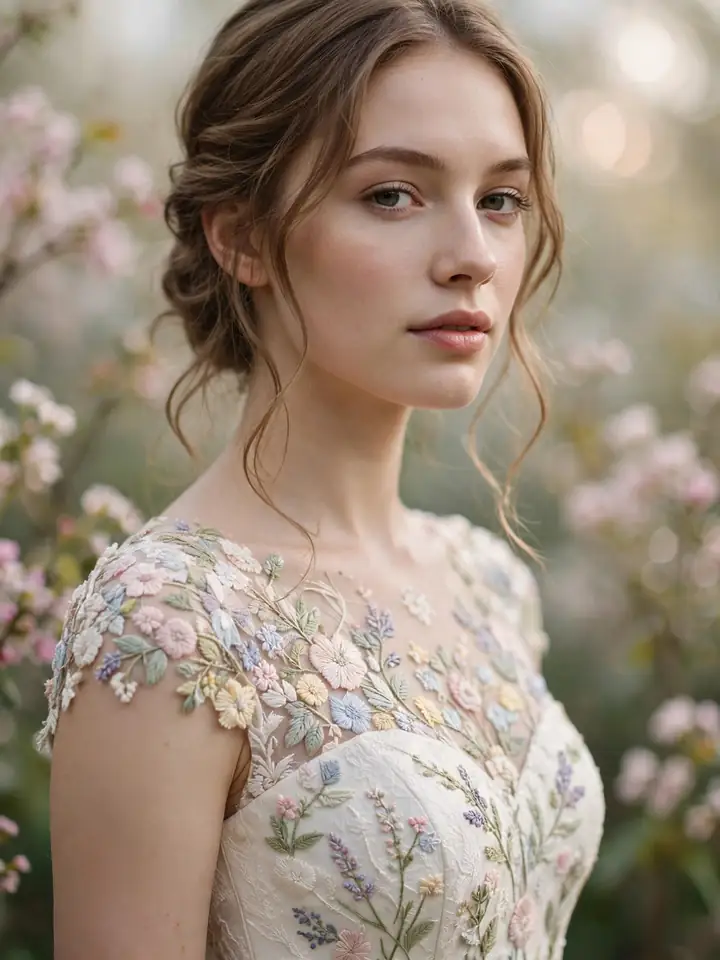
If you love florals but want the skirt to stay clean, a hand-embroidered bodice is the perfect compromise. Colored threadwork — blush roses, sage leaves, cornflower blue — climbs over the bodice like a garden trellis while the skirt stays ivory. The embroidery reads as jewelry, drawing the eye to the face and neckline.
This approach flatters almost every figure because the color sits where you want attention. Strapless and sweetheart necklines show off the work best, and the technique pairs beautifully with fitted bodices. It also ages well in photographs, with a timeless, almost heirloom quality.
Hand embroidery is among the most labor-intensive bridal details, so expect couture-level pricing for fully hand-stitched bodices. Machine-embroidered options mimic the look for less — inspect them up close for dense, even threadwork. Either way, choose a lining that lets the colors glow rather than fighting them.
4. Wildflower Meadow Prints
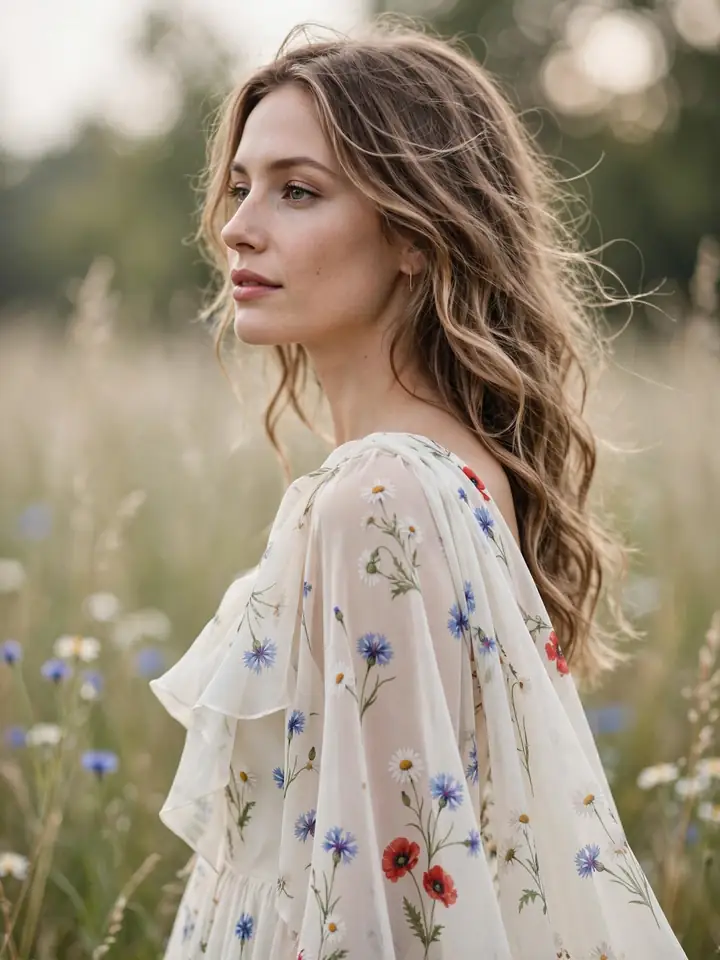
Wildflower prints bring an untamed, bohemian spirit to the floral wedding dress colored trend. Instead of grand roses, these gowns are scattered with daisies, cornflowers, poppies, and grasses — small, cheerful blooms that feel spontaneous. The effect is youthful and romantic, like walking through a meadow in a dress that grew there.
This is the ideal print for outdoor ceremonies: barn weddings, festivals, and meadow elopements. Flowing chiffon and soft tulle let the scattered pattern move naturally, and empire or A-line cuts keep the vibe effortless. Pair with loose waves, a flower crown, and barely-there makeup for full boho effect.
One caution: small scattered prints can read casual, so keep the construction bridal — a structured bodice, quality lining, and a proper train lift it from sundress to wedding gown. If the print feels too playful for the ceremony, wildflower dresses make spectacular reception gowns that let you dance freely.
5. Blush Underlay with Floral Lace
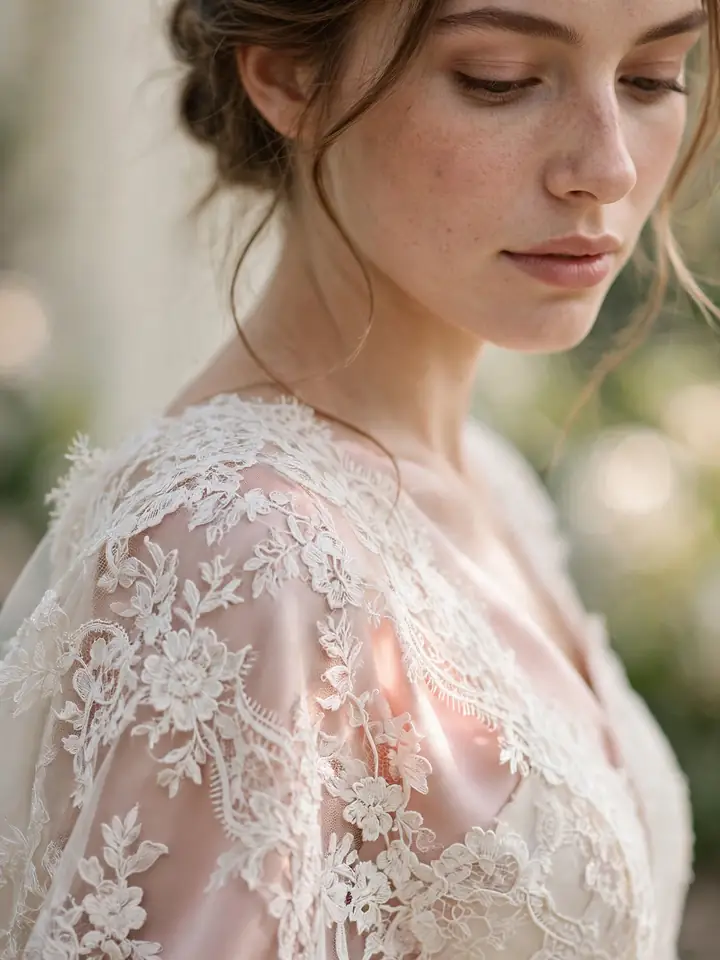
A colored underlay is the subtlest way to wear a floral wedding dress colored with warmth. Ivory floral lace layered over blush or rose satin lets color glow through the pattern like light through petals. From a distance the dress reads bridal and soft; up close, the floral detail reveals its rosy secret.
This technique flatters every skin tone because the warm underlay reflects a gentle glow onto the face. It is also one of the most traditional ways to wear color, so it suits brides whose families expect something close to classic. Ballgowns, mermaids, and sheaths all take to the blush-lace combination.
When ordering, view the lace over several underlay swatches in natural daylight — the same lace can read blush, peach, or almost nude depending on the lining. Ask whether the underlay can be dyed to match your palette. Note that a colored lining photographs slightly darker than it looks in person, so go a shade lighter than instinct.
6. Ombré Floral Gradient Gowns
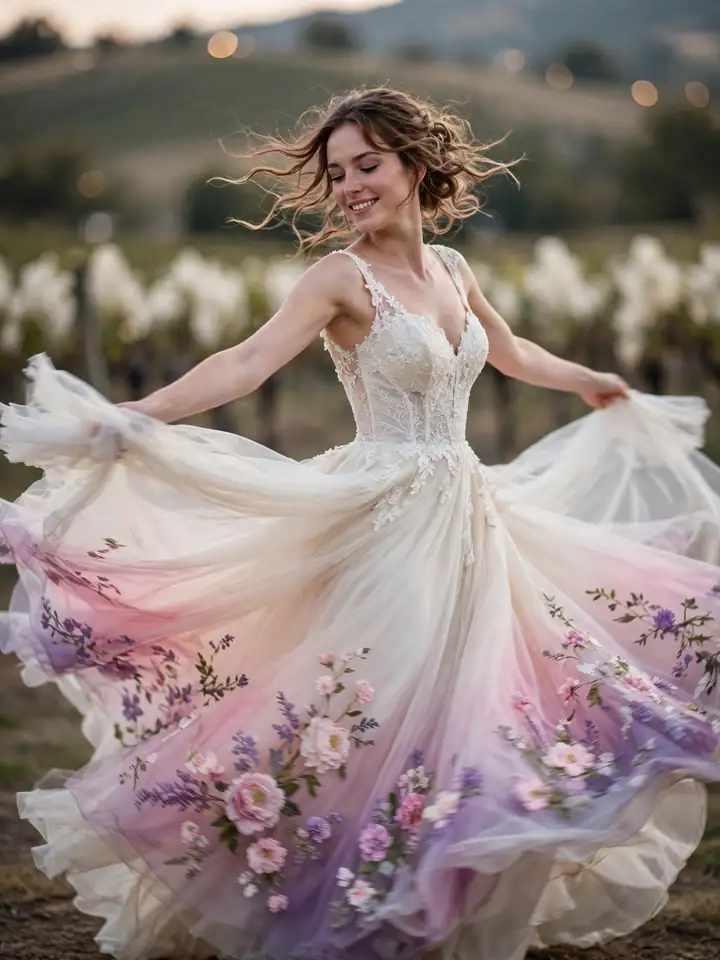
Ombré turns the floral wedding dress colored concept into pure drama: the bodice begins in ivory and melts downward into waves of pink, lavender, or coral florals. The gradient mimics a flower opening — pale at the heart, saturated at the edges — and creates breathtaking movement in photographs, especially mid-twirl.
This is a look for the confident bride: vineyards at dusk, modern galleries, evening ceremonies where the dress catches dramatic light. Because the color intensifies toward the hem, the design naturally elongates the body — wonderful for petite brides who want height without heels.
Ombré is technically demanding, so quality varies enormously. The best versions are hand-dip-dyed or airbrushed for a seamless transition; cheaper ones show harsh lines where colors meet. Ask the salon how the gradient is achieved before committing, and photograph the dress in different lighting before the wedding.
7. Vintage Floral Damask Gowns
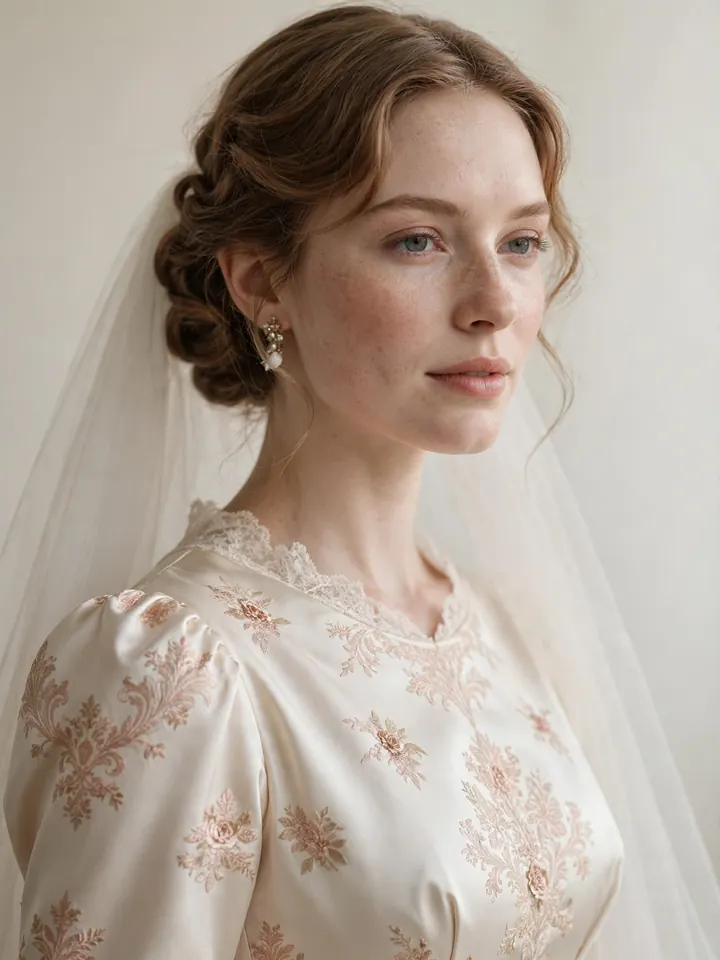
Damask brings old-world richness to a floral wedding dress colored in champagne, rose-gold, and antique gold. The woven floral pattern has a subtle sheen that shifts as you move, giving the gown a regal, tapestry-like depth — florals for the bride who loves history and heritage venues.
This fabric shines in historic settings: manor houses, cathedrals, libraries, and winter weddings where its weight feels appropriate. Structured silhouettes with long sleeves or high necklines lean into the vintage mood, and the pattern’s formality means you can favor heirloom jewelry over statement pieces.
Damask is substantial, so consider season and comfort — glorious in autumn and winter, heavy in summer heat. Because the pattern is woven rather than printed, it never fades, making these gowns excellent candidates for preservation or passing down. It photographs with a quiet luxury loud prints cannot match.
8. Moody Dark Botanical Gowns
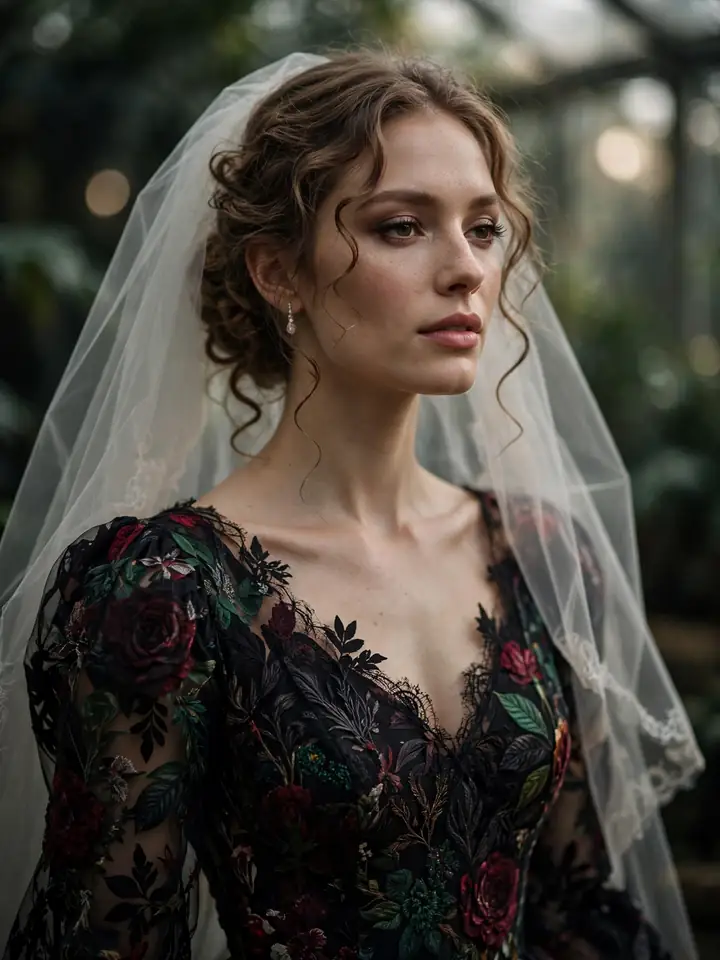
Not all florals are sweet. Moody botanical gowns — deep burgundy, black, and emerald blooms on dark grounds — give the floral wedding dress colored trend an edgy, romantic-gothic soul. Inspired by Dutch still-life paintings, these dresses feel dramatic and intellectual.
Dark florals are made for autumn and winter weddings, candlelit ceremonies, and venues with character: greenhouses, industrial lofts, historic hotels. They photograph spectacularly against light and dark backgrounds alike, and flatter curvy figures because deep tones recede while the pattern adds interest.
Balance is everything. Keep the bouquet lush but tonal — deep reds and plums — and let the dress be the single dark note by keeping shoes and accessories light or metallic. If a fully dark gown feels like too much, look for dark floral bodices melting into ivory skirts.
9. Pastel Garden Party Florals
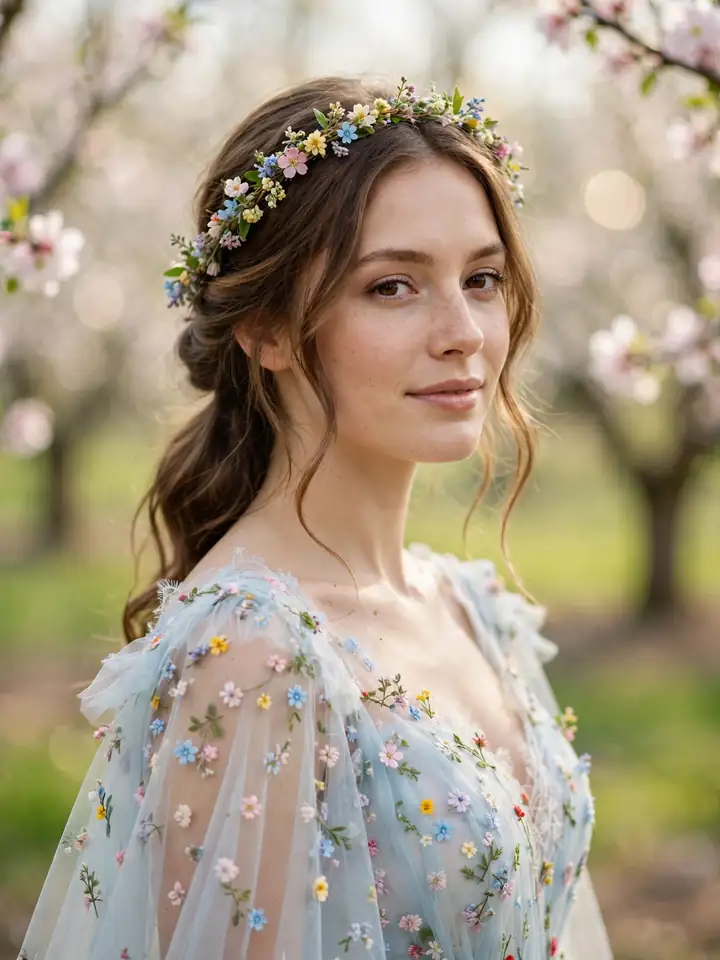
Pastel florals are the sweet spot between white and color: tiny multicolor blossoms scattered over pale blue, mint, or blush tulle. The base stays light, so the dress still reads unmistakably bridal, while the scattered color adds playfulness. It is the floral wedding dress colored look most likely to win over a traditional mother-in-law.
These gowns are made for daytime celebrations — spring orchards, afternoon garden ceremonies, and destination weddings. Light fabrics and tea-to-floor lengths keep the feeling fresh, and the print hides wrinkles and travel creases beautifully.
Styling is easy because the palette is built in: pull one accent color — cornflower blue, butter yellow — into your shoes, nails, and bouquet. Pastel prints also glow softly in bright sun where stark white can blow out. Just avoid clashing your wedding florals; let the dress set the palette.
10. Floral-Trimmed Sleeves and Straps
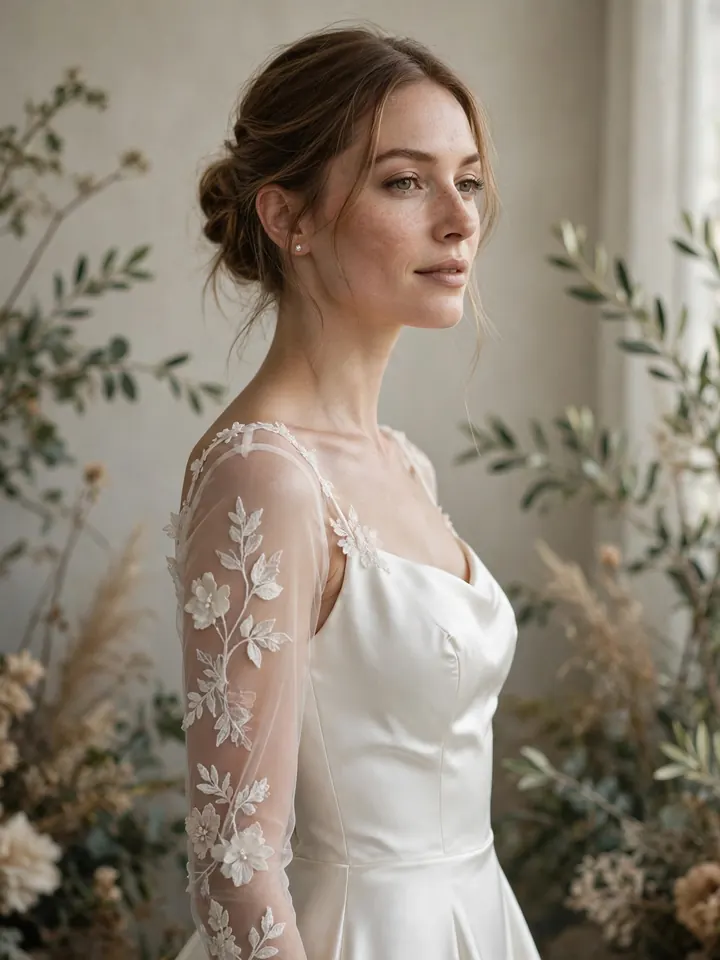
Sometimes the most powerful florals are the smallest. A sleek satin gown with floral appliqué climbing sheer sleeves or edging a neckline gets all the romance of a floral wedding dress colored with blossoms — without committing the whole skirt to pattern. It is florals as jewelry, placed exactly where the eye lands.
This detail works for minimalist brides who want one softening touch, and for second dresses where a full floral gown might feel like too much. Sheer floral sleeves also solve the coverage question elegantly for modest brides and evening ceremonies.
Because the florals are concentrated, craftsmanship shows: check that each petal is securely tacked and edges are finished so nothing snags. Detachable floral sleeves are a clever investment — wear them for the ceremony, remove them for dancing. Match the appliqué colors to your bouquet for a cohesive finish.
11. Floral Appliqué Trains
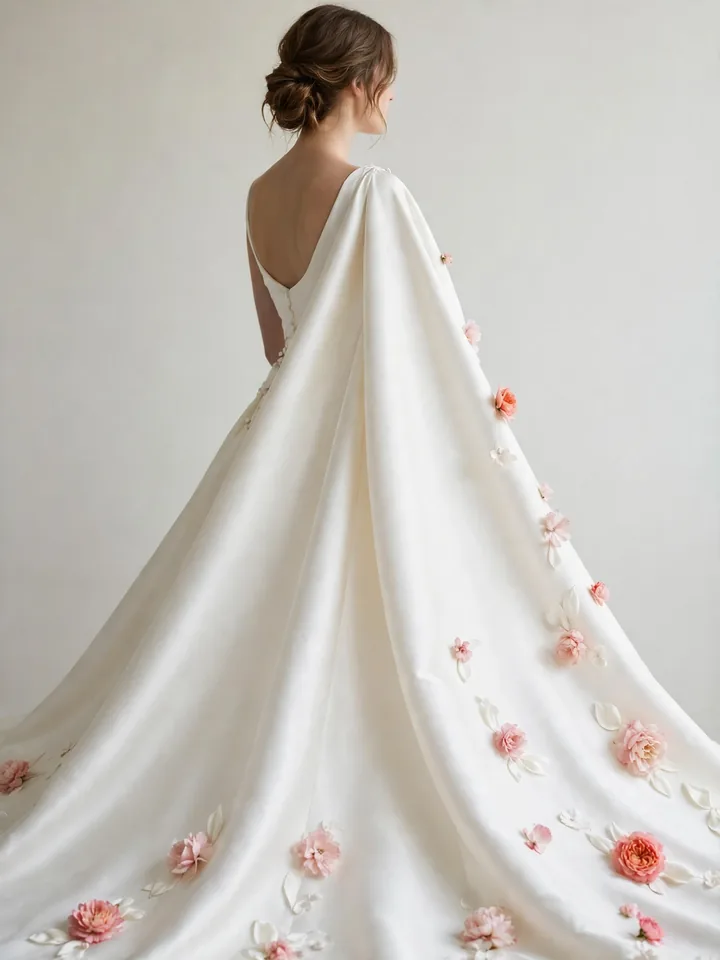
The train is the most photographed part of any gown — so why not make it bloom? A floral wedding dress colored with cascading appliqués down the train turns every exit and every back-shot into a moment. The front stays clean and classic while the back tells a flower-filled story.
This design is pure ceremony magic: walking down the aisle, all eyes are on the floral cascade behind you, and photographers get their hero shot without posing. The front-back contrast works for both traditional ceremonies and fashion-forward receptions.
A heavily appliquéd train needs a bustle designed around the florals — discuss bustling at your first fitting, not your last. The appliqués add weight, so make sure the internal structure can support it comfortably for hours. And plan one dedicated portrait session for the back of the dress.
12. Tropical Exotic Floral Gowns
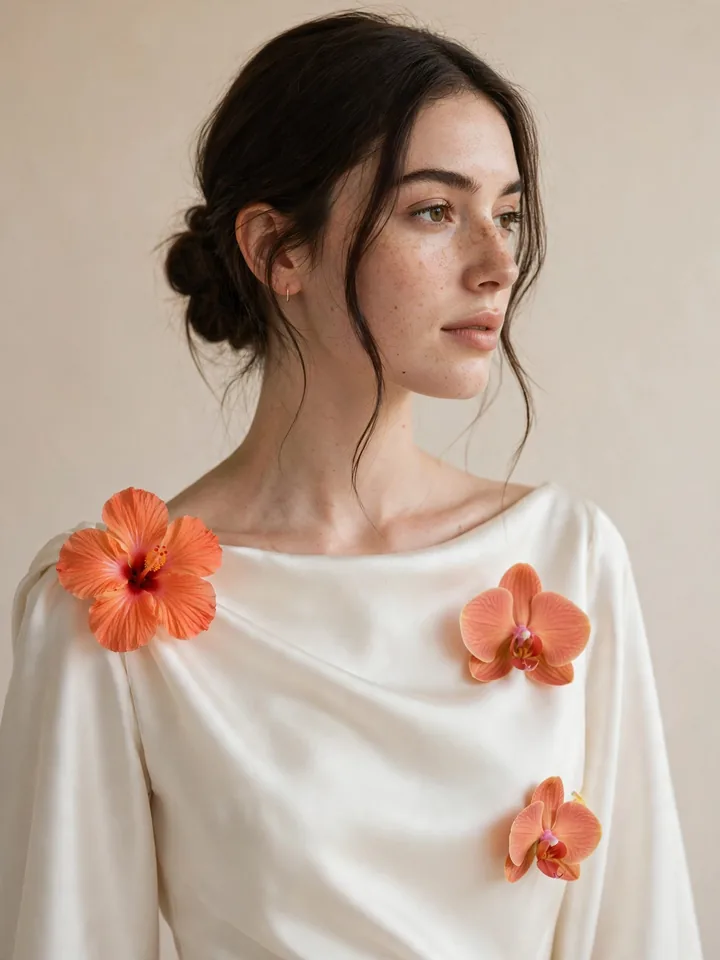
For destination weddings, nothing beats a tropical floral wedding dress colored with orchids, hibiscus, and monstera in vivid coral, orange, and fuchsia. These bold botanicals match the energy of beach ceremonies and jungle resorts — a white dress can look stark against lush tropics, while exotic florals belong to the landscape.
Big, confident prints demand simple silhouettes: slip dresses, sarong-inspired drapes, and bias-cut gowns let the pattern do the talking. The look pairs perfectly with barefoot ceremonies, loose hair with fresh flowers, and gold jewelry echoing the print’s warm tones.
Scale matters: oversized blooms flatter taller frames, while smaller repeats suit petites. Check that the print’s background is a warm ivory rather than stark white, which photographs more naturally in tropical light. Pack the dress with tissue between folds — large-scale prints show creases more than small ones.
13. Floral Sequin Sparkle Gowns
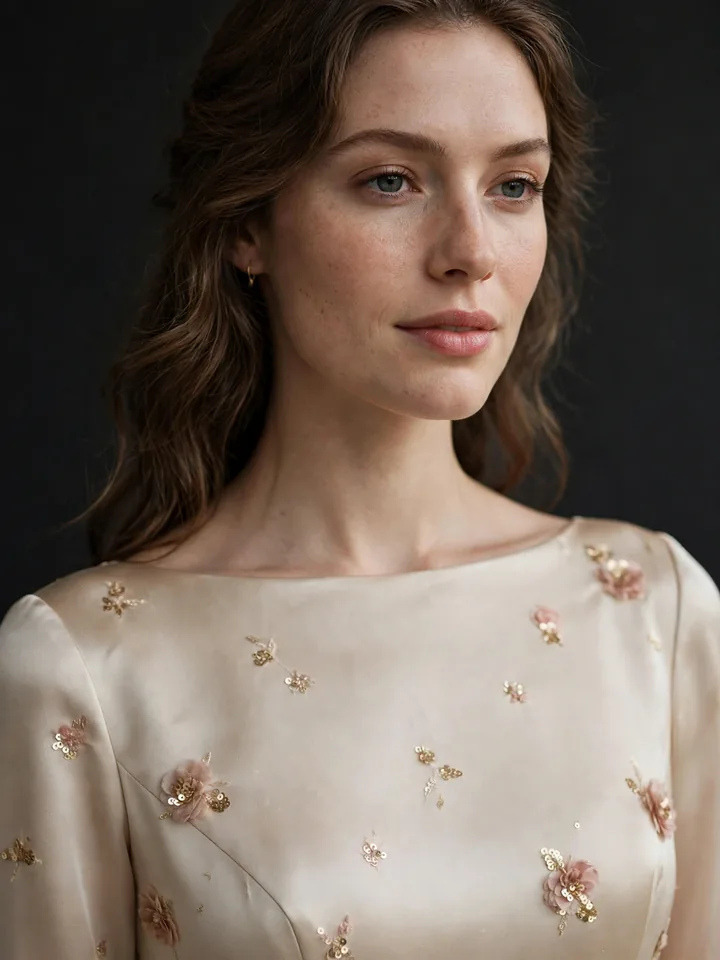
Floral sequins merge two bridal obsessions — botanicals and sparkle — into one dazzling gown. Flowers rendered in gold, rose, and champagne sequins catch candlelight and camera flashes alike, making this the floral wedding dress colored choice for evening weddings and brides who want to shimmer down the aisle.
Sequin florals work best on fitted silhouettes — sheaths, mermaids, columns — where the beading lies flat and reflects light evenly. The texture adds welcome dimension in photographs. Pair with understated accessories; the dress is already the jewelry.
Comfort deserves honest consideration: sequins can scratch delicate skin, so ensure the gown is fully lined and try sitting, hugging, and dancing in it at the fitting. Quality beading is hand-sewn and flexible; if the sequins feel stiff or plasticky, keep looking. A well-made sequin floral gown moves like liquid light.
14. Tea-Length Floral Bridal Dresses
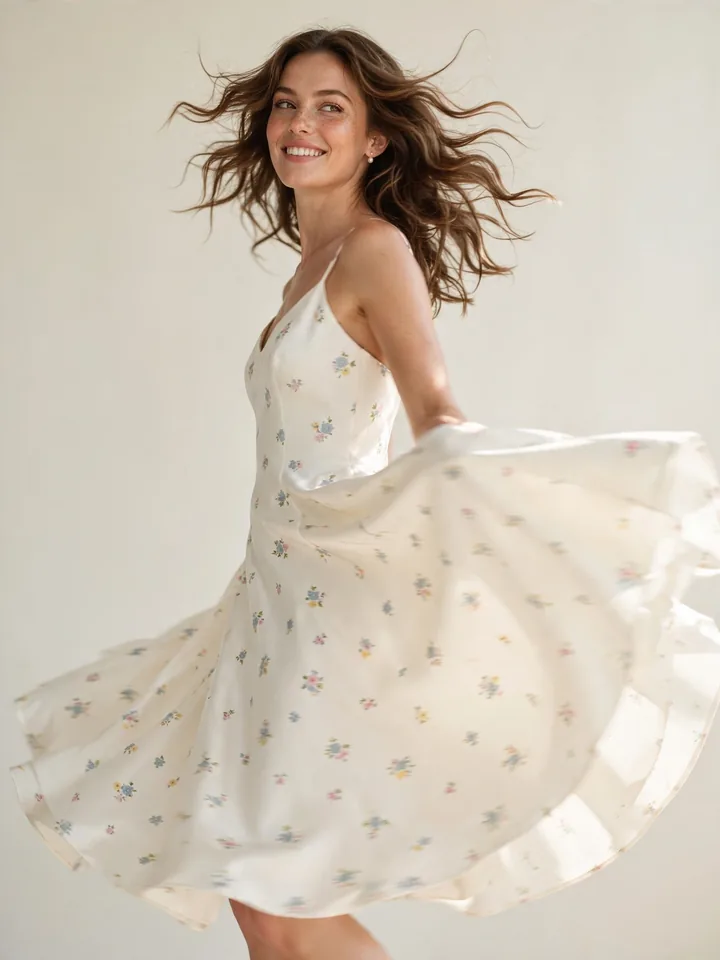
Tea-length floral dresses channel 1950s garden-party glamour: a fitted bodice, nipped waist, and full skirt falling to mid-calf, all in a cheerful floral print. This floral wedding dress colored style is playful, danceable, and unapologetically fun — perfect for city hall weddings, retro themes, and brides who plan to live on the dance floor.
The silhouette is universally flattering: the defined waist creates an hourglass on any figure, and the shorter hem shows off statement shoes — colored heels that pick up a shade from the print. Tea-length also photographs beautifully in motion, with the skirt flaring in twirls and candids.
Retro florals — ditsy patterns, bold mid-century blooms — lean into the vintage mood, while watercolor keeps it softer and modern. Add a birdcage veil instead of a long one, which can overwhelm a shorter hem. And do not forget a petticoat if you want that perfect bell shape.
15. Champagne-Gold Floral Gowns
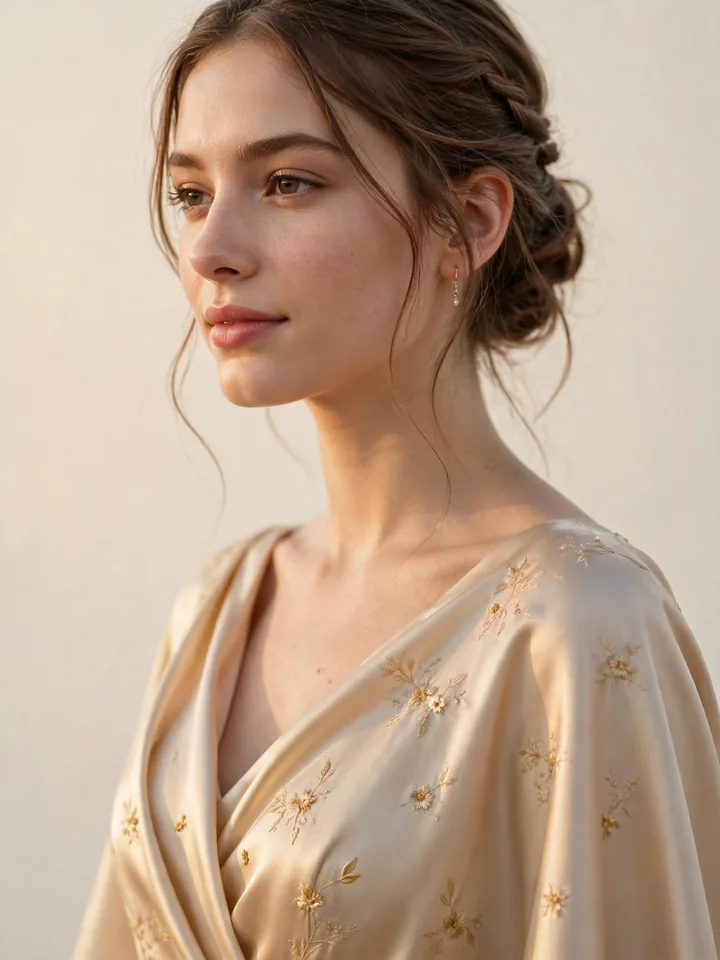
Champagne-gold florals are the most luxurious take on the floral wedding dress colored trend: golden blossoms blooming across warm metallic silk. The effect is pure opulence — the dress glows from within, especially in candlelight and golden-hour sun. A favorite for black-tie weddings and evening ceremonies.
Metallic bases flatter warm skin tones beautifully and photograph with a richness matte fabrics cannot match. Keep the silhouette sleek — the fabric and color already provide the drama — and let gold accessories complete the look. These gowns also pair stunningly with deep, moody wedding florals in burgundy and plum.
One tip: metallic fabrics can be less forgiving, showing wrinkles and clinging where you least want it. Choose a gown with proper structure and lining, and have it steamed — never ironed — before the ceremony. The investment pays off in photographs that look lit from the inside.
16. Floral Corsage-Accented Minimal Gowns
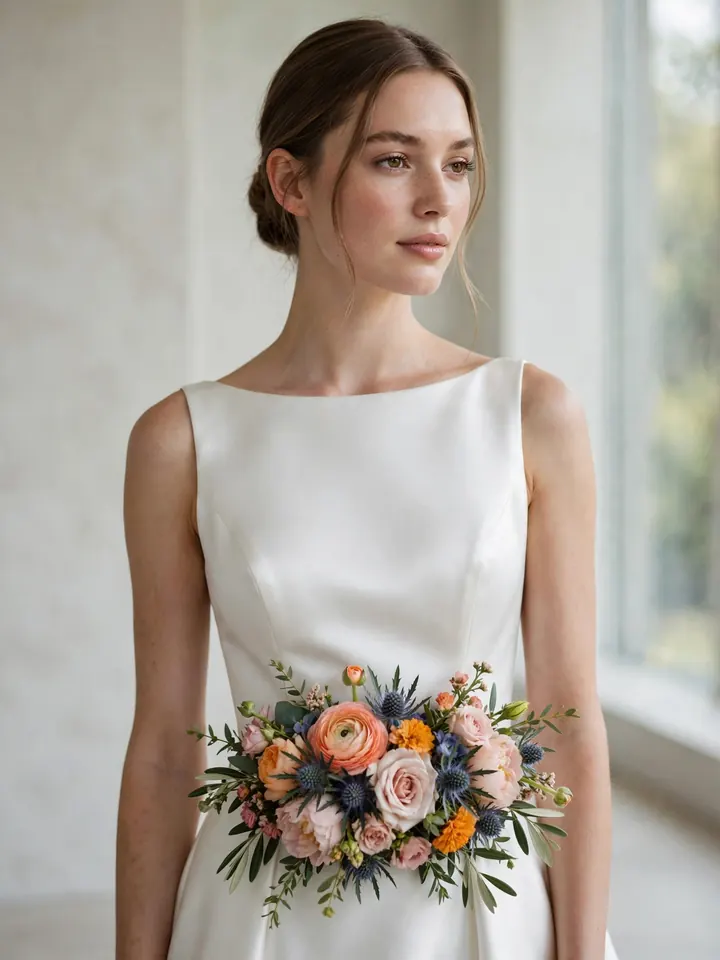
Minimalist brides do not have to sit out the floral trend. A clean satin gown with a single statement floral corsage at the waist — fresh or silk blooms in full color — gives you a floral wedding dress colored with exactly one perfect note. The contrast between stark simplicity and lush flowers is strikingly modern.
This approach is wonderfully versatile: choose fresh flowers for the ceremony, swap in a jeweled floral for the reception. It also lets your florist coordinate the dress accent with your bouquet and table arrangements, tying the entire wedding design together through one repeated motif.
If you use fresh flowers, have your florist build the corsage on a pin base the morning of the wedding, and keep a backup bloom in water for touch-ups. Silk or preserved flowers are a stress-free alternative that last all day and become a keepsake. Position the accent at your natural waist for the most flattering effect.
17. Two-Piece Floral Bridal Sets
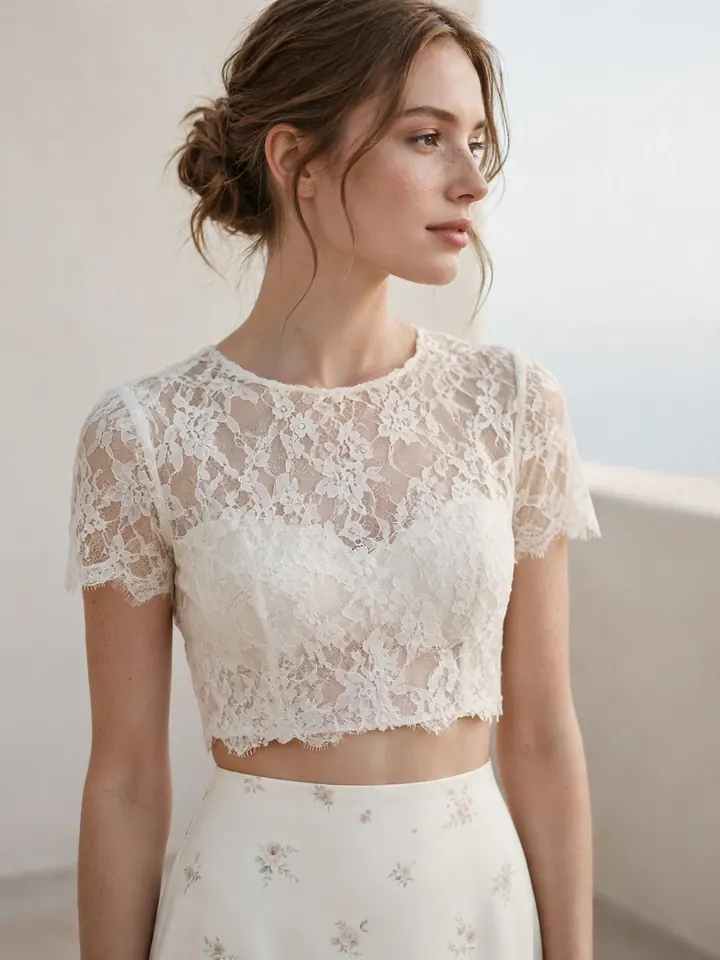
Two-piece bridal sets — a cropped top and flowing skirt in matching floral fabric — are the cool-girl answer to the floral wedding dress colored trend. The look is modern, a little daring, and practical: separates are easier to fit than one-piece gowns, and you can re-wear the pieces after the wedding.
The styling possibilities are endless. Wear a long-sleeved lace crop top for the ceremony and swap to a silk camisole for dancing. Choose a high-waisted skirt that shows just a sliver of skin, or overlap the pieces for full coverage. A brilliant option for brides between standard sizes, since each piece is fitted independently.
For the most bridal effect, keep the fabric luxurious — floral jacquard, embroidered tulle, printed silk — and ensure the waistband junction is finished beautifully, since it becomes a design feature. Two-piece sets photograph with a fresh, editorial energy traditional gowns cannot quite capture.
18. Floral Reception Dresses
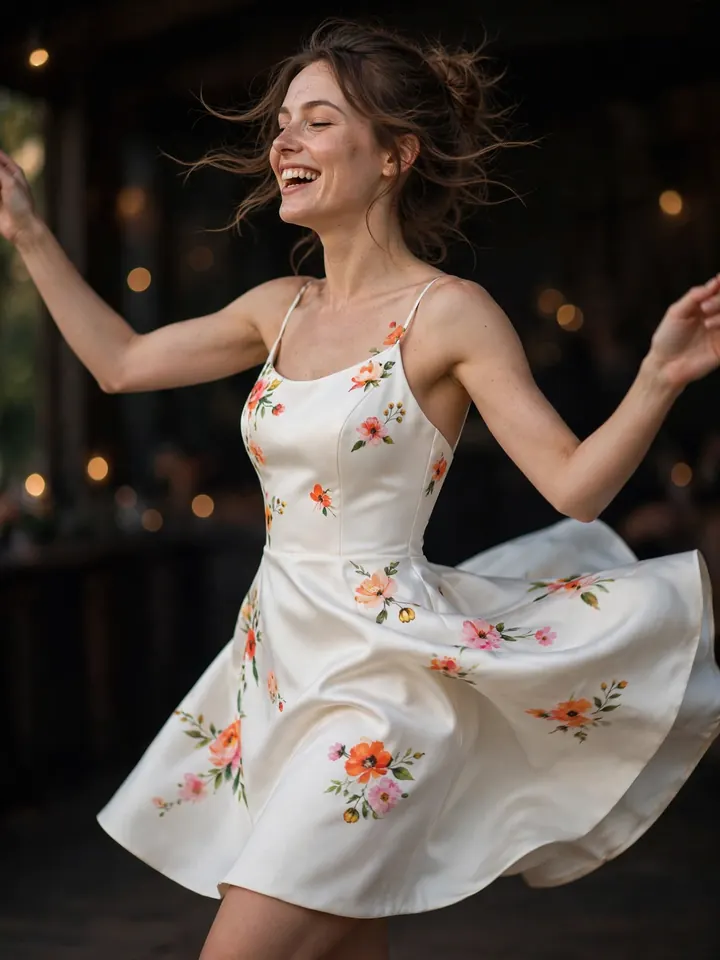
The reception dress is where florals can truly let loose. After a classic ceremony gown, changing into a shorter, bolder floral wedding dress colored with vibrant painted blossoms signals that the party has started. Cocktail-length hems and dance-friendly cuts make this the most fun part of your wedding wardrobe.
A second look solves real problems: you can dance without a bustle, navigate a crowded floor, and survive a summer reception in a lighter dress. It also gives you a second set of photographs with a completely different mood — many brides say their reception portraits are their favorites.
When choosing the print, go bolder than you would for the ceremony: saturated colors, larger blooms, unexpected palettes. The reception is lower-stakes and higher-energy, so the dress can match. Just make sure the change is quick — a dress you can step into without helpers keeps the party momentum going.
FAQ
Are colored floral wedding dresses still appropriate for a traditional ceremony?
Absolutely. Floral details in soft colors — blush underlays, pastel prints, embroidered bodices — read as bridal while adding personality. If tradition matters, keep the silhouette classic and let the florals be the single modern note.
What is the difference between floral print, embroidered, and appliqué wedding dresses?
A floral print is dyed or printed directly onto the fabric for a flat, painterly effect. Embroidery uses colored thread stitched into the fabric for texture. Appliqué attaches separate fabric flowers onto the gown for a three-dimensional, sculptural look.
Which floral wedding dress styles photograph best?
Watercolor and pastel prints glow in bright daylight; sequin and metallic florals shine at evening receptions; 3D appliqué creates depth in close-up portraits. Dark botanicals look stunning in moody, editorial photography. Ask your photographer which textures their lens loves.
Can I wear a floral wedding dress to a formal black-tie wedding?
Yes — choose elevated florals. Champagne-gold prints, hand-embroidered bodices, and tonal 3D appliqué on structured ballgowns or sleek sheaths all read as black-tie appropriate. Keep the print refined, the silhouette formal, and the accessories polished.
How do I choose bouquet flowers to match a floral wedding dress?
Pull one or two colors from the dress’s print and repeat them in the bouquet, or go tonal — all-white or all-blush — so the flowers complement rather than compete. Bring a fabric swatch to your florist. If the dress is bold, keep the bouquet simple.
Choosing a floral wedding dress colored with blooms that feel like you is one of the most joyful parts of wedding planning. Whether you fall for whisper-soft watercolor, sculptural 3D appliqué, or moody dark botanicals, the key is balance: let the flowers be the star, keep the silhouette bridal, and coordinate your accessories so every detail feels intentional.
Start by saving the styles that made your heart skip, then try them on in person — florals transform under real light and on a real body in ways photos cannot predict. Bring your most honest friend and a swatch of your wedding palette. The right floral gown will not just match your wedding; it will feel like it was grown for you.